●Insists Supreme Court ruling on matter subsists
The Akwa Ibom State Government has dismissed circulating media reports suggesting a planned “return” of its oil wells to Cross River State, describing the claims as speculative, legally baseless, and a fruitless attempt to distort constitutional realities.
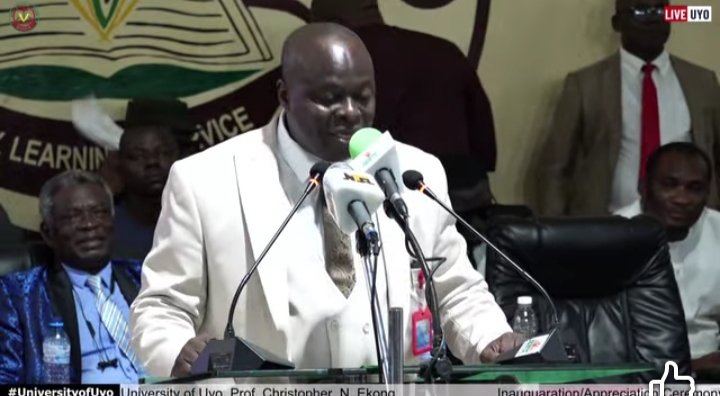
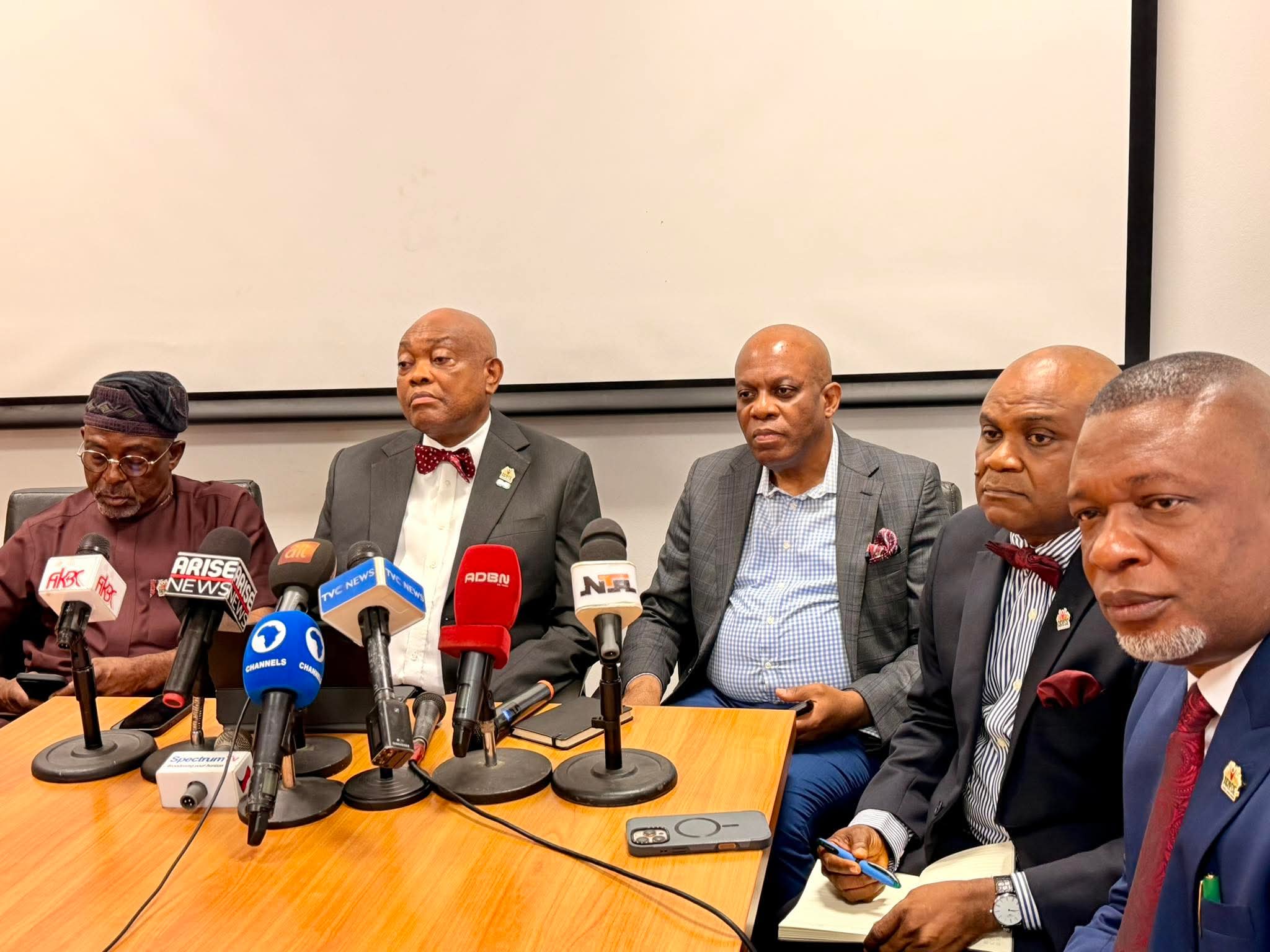
At a press briefing held today, 16 February 2026, at the Government Press Centre, Uyo, the State Attorney-General and Commissioner of Justice, Uko Essien Udom, SAN, clarified the state’s position.
The briefing was prompted by a purported Inter-Agency Committee report recently submitted to the Revenue Mobilization Allocation and Fiscal Commission (RMAFC).
Accompanied by Mr. Paul Usoro, SAN, the Attorney-General noted that the RMAFC has already clarified the status of the document received on 13 February 2026. Contrary to rumours of a finalised reallocation, Udom stated that the Commission confirmed it received only a draft report, which does not constitute an approved recommendation or a policy decision.
The heart of the dispute centres on the long-standing legal history between the two sister states, which were a single entity until 23 September 1987.
The Akwa Ibom State Government reminded the public of two landmark Supreme Court rulings:
The 2005 Judgment: The Supreme Court dismissed Cross River’s claims over the southern estuarine territory where the oil wells are located.
The 2012 Judgment: Following the International Court of Justice (ICJ) ruling on the Bakassi Peninsula, the apex court ruled decisively that Cross River State ceased to be a “littoral state” (a state with a coastline).
“The legal implication is that Cross River no longer possesses a seaward boundary,” the State Government maintained. Without a coastline, the state is not entitled to offshore oil derivation under Nigerian law.
Constitutional Finality
Udom emphasised that under Section 235 of the 1999 Constitution, decisions of the Supreme Court are final.
“No inter-agency committee, technical panel, or institutional process can alter, amend, or sit in appeal over a judgment of the Supreme Court,” Udom asserted. “Any action inconsistent with a subsisting judgment of the apex court would be unconstitutional, null, and void.”
Mr. Paul Usoro, SAN, added that the 2002 ICJ judgment, which ceded Bakassi to Cameroon, effectively “obliterated” Cross River’s right to offshore oil wells, noting that unless the Supreme Court reviews its own decision—which has not happened—the status quo subsists.
Addressing the geographical confusion, Information Commissioner Aniekan Umanah explained that merely seeing water does not guarantee maritime access. He clarified that international boundary lines placed the Bakassi Peninsula—Cross River’s only link to the sea—within Cameroonian territory, effectively landlocking the state’s maritime claims.
The Government concluded by assuring citizens that it remains “vigilant and engaged,” vowing to defend Akwa Ibom’s resources “responsibly, peacefully, and resolutely.”