By Ofonime Honesty
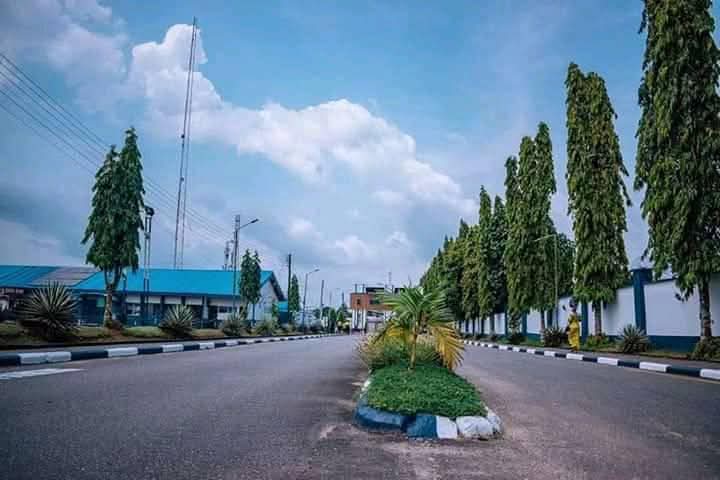
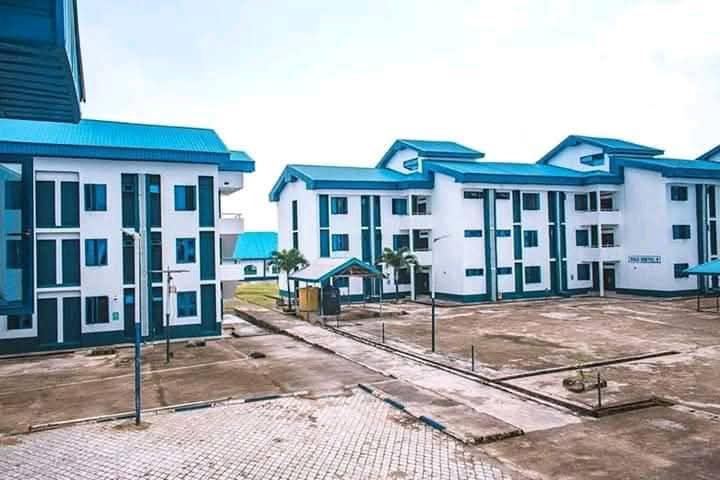
It was with a profound sense of purpose that I found myself at the Dakkada Skills Acquisition Center, Ikot Ada Idem, Ibiono Ibom in Akwa Ibom State, on Monday, February 16, 2026.
There is a saying that the future belongs to those who prepare for it today. That day, in the midst of young minds from across the nine states of the Niger Delta, I witnessed a glorious chapter of such preparation being written.
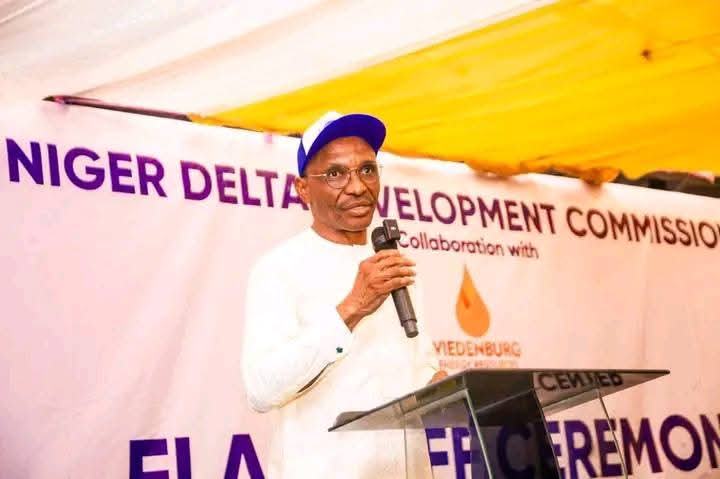
The occasion was the flag-off of the Niger Delta Development Commission’s (NDDC) Compressed Natural Gas Autogas Conversion Training Programme, organised in collaboration with Viendenburg Energy Resources.
One might have arrived expecting a usual government ceremony comprising boring and soulless long speeches, ribbon-cutting, and photo sessions. Well, what was witnessed instead was a masterclass, delivered by the Commissioner representing Akwa Ibom State on the NDDC Governing Board, Apostle Abasiandikan Nkono.
As Apostle Nkono addressed the successful applicants, it became clear that the Commission was not merely launching a training programme; it was actually commissioning a new generation of problem-solvers. His words carried additional weight because they were anchored in tangible commitment.
“You have been given an opportunity to shape the future of our region and nation,” he began, his voice firm with conviction. “This training is proof that the NDDC is deliberate about equipping our people with skills that matter in today’s world.”
To understand why it truly matters, one must first grasp the scale of the global energy transition now underway. Across the world, nations are racing to embrace cleaner, more affordable energy alternatives. CNG has become a present reality used to power vehicles, industries, and economies while reducing carbon emissions and operational costs.
Countries that positioned themselves early in this sector are now reaping dividends. If the Niger Delta, historically the engine room of the nation’s energy sector, fails to produce the technical manpower required to drive this emerging economy, we will have squandered a glorious opportunity.
Apostle Nkono addressed the foregoing with remarkable clarity. He did not offer the usual platitudes; instead, he laid before them a challenge. It sounded a bit like a call to arms. This was not just about acquiring a certification; it was about ensuring that when the world looks to Nigeria for autogas expertise, it will find sons and daughters of the Niger Delta ready and waiting.
“This programme ensures that when the world looks to Nigeria for autogas expertise, they will find Niger Deltans ready to deliver.”
“I want you to see yourselves as solution providers,” he continued. “The world is changing, and the problems of today are the business opportunities of tomorrow. Develop the big eye to spot opportunities where others see problems,” he appealed.
He was asking those young men and women to abandon the passive posture of job seekers waiting for opportunities to fall from the sky. He was telling them that the shift to CNG is, in fact, a landscape rich with myriad possibilities.
Apostle Nkono did what great leaders do: he reframed their reality. He looked at the trainees as the future technical backbone of Nigeria’s emerging autogas economy. He reiterated his belief in their potential: “Whether it is in energy, technology, or skills, our people must be able to hold their own anywhere in the world.”
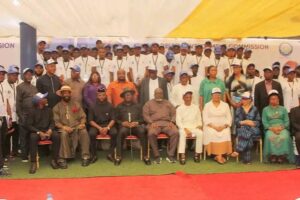
His words resonated deeply because they were grounded in the tangible assurance that the initiative was not an isolated event but a sustained commitment from the NDDC.
As I left the Dakkada Skills Acquisition Center, I was filled with a sense of satisfaction. This is the sort of initiative that must be replicated across the country and Africa. We must seize this great opportunity!
Of course, Nigeria holds the 9th largest proven natural gas reserves in the world and ranks first in Africa.
Such a huge market to explore!
(Ofonime Honesty is the Press Secretary to Apostle Abasiandikan Nkono, Akwa Ibom State Representative, NDDC Governing Board).