Obi: Leprous hand or cleansing agent?
By Pius Ebong
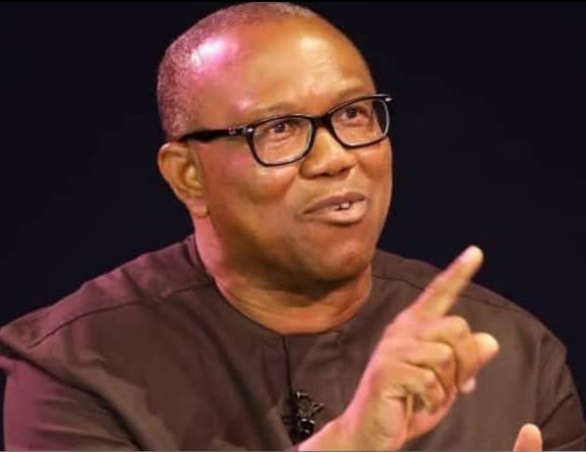
Peter Obi remains one of the most debated figures in contemporary Nigerian politics. To some, he is a disruptive force unsettling established interests; to others, he represents the possibility of a cleaner, more accountable political culture.
Understanding his true impact requires a look at his political journey, his governance record, and the systemic forces that have shaped his rise.
A legacy of persistence
Obi’s entry into politics followed a successful career in the private sector. He first contested the Anambra State governorship in 2003 under the All Progressives Grand Alliance (APGA). Though not initially declared the winner, he waged a relentless legal battle for nearly three years. In 2006, the courts finally recognised him as the rightful victor. That landmark case set a precedent in Nigerian jurisprudence and established a defining pattern of his career: persistence in the face of entrenched interests.
As governor, Obi built a reputation for frugality and the surgical use of public funds. He prioritised human capital, famously returning mission schools to their original owners while supporting them with state funding and infrastructure. His administration modernised health facilities, decentralised development through rural road projects, and provided essential equipment to schools.
Perhaps his most enduring legacy was his commitment to fiscal buffers; he left substantial savings and investments for the state—a rare feat in a political landscape often defined by debt.
Conflict with the status quo
These achievements were won through friction. Obi faced stiff resistance from “political godfathers” and a hostile legislature that bristled at his refusal to sustain patronage networks. This clash led to his impeachment in 2006, which he successfully overturned in the Court of Appeal.
A year later, he was again sidelined when an election was held to replace him before his term had expired. Once more, he turned to the judiciary. The Supreme Court ruled in his favour, allowing him to complete his full mandate. These legal victories reinforced his image as a leader who relies on the strength of institutions rather than backroom political bargaining.
The national movement
Much of Obi’s national appeal stems from his brand of “Obinomics”—a focus on prudence, accountability, and data-driven governance. In an environment where political spending is often opaque, his insistence on reducing the cost of governance set him apart.
While he served as the vice-presidential candidate for the People’s Democratic Party (PDP) in 2019, his move to the Labour Party (LP) in 2023 acted as a catalyst for a national movement. His candidacy energised a youth demographic frustrated by systemic corruption. His message was consistent: shift the economy from consumption to production, strengthen the rule of law, and govern with integrity.
Despite lacking the traditional “structure” of the major parties, Obi defied skeptics by finishing a strong third in a high-stakes presidential race, fundamentally altering the math of Nigerian elections.
Ideology vs party fluidity
Critics often point to his movement between parties—from APGA to PDP, to Labour, and discussions surrounding the ADC or a potential “Big Tent” NDC—as a sign of inconsistency. Conversely, his supporters argue that these shifts are pragmatic searches for platforms that allow for internal democracy. In a landscape dominated by vested interests, finding a vehicle for genuine reform is a constant challenge.
The verdict: Disruption or reform?
As Obi looks toward the future, his path remains a subject of intense speculation. Whether he leads a formidable “Third Force” coalition or evolves into a prominent advocate for systemic reform, his influence is undeniable.
This returns us to the central question: Is Peter Obi a “leprous hand” or a “cleansing agent”? To those who profit from the traditional system of patronage and waste, Obi is a disruptive contagion—unwilling to play by the unwritten rules of the elite.
However, to millions of citizens demanding transparency, he is a necessary antiseptic.
Ultimately, Obi is “leprous” only to a system that thrives on opacity. To a nation seeking a functional future, he remains a symbol of the cleansing potential of principled leadership. Nigeria’s evolving political landscape will determine which of these descriptions stands the test of time.
•Pius Ebong is the South-South Coordinator of the Community Structure Foundation (CSF). He writes from Calabar, Cross River State.