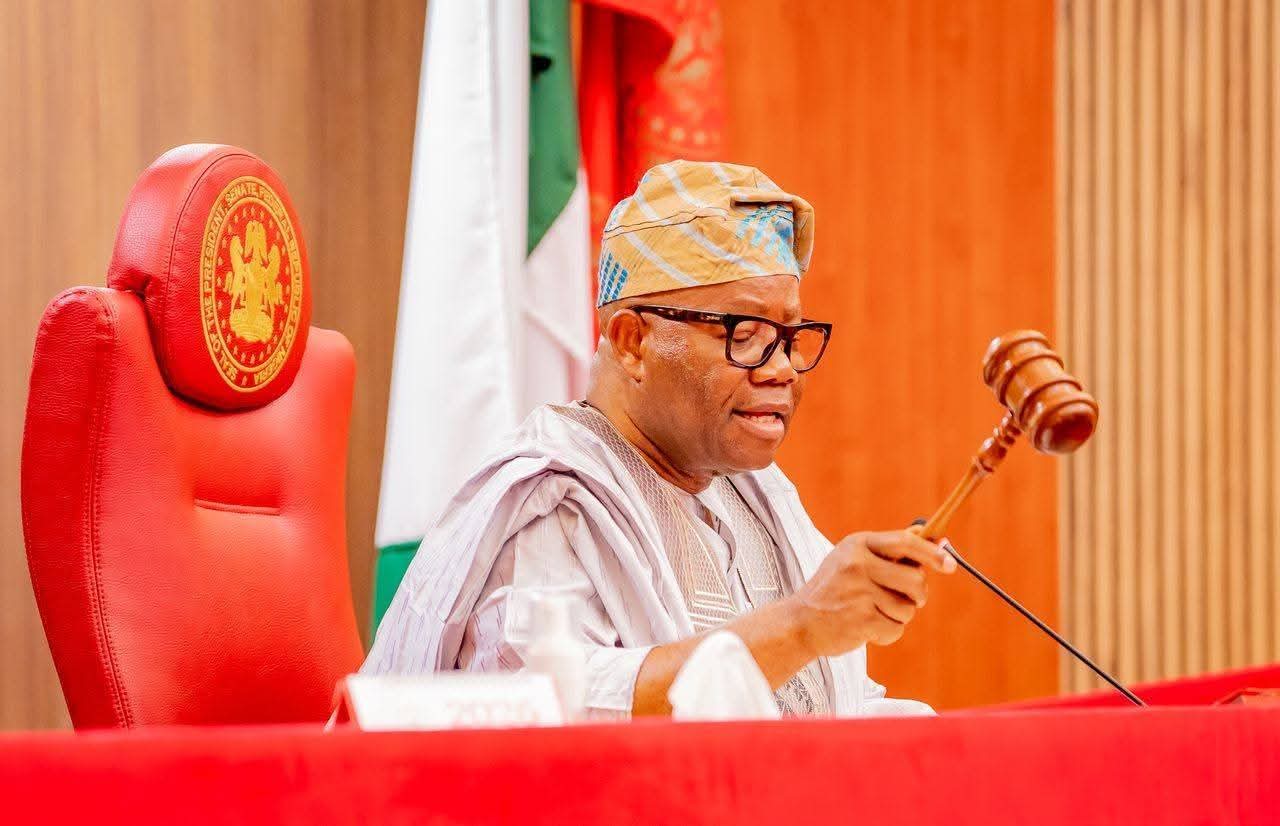
Senator Henry Seriake Dickson, who represents Bayelsa West Senatorial District in the National Assembly, has formally resigned from the Peoples Democratic Party (PDP), bringing an end to his long association with the party under which he served as governor of Bayelsa State and rose to national prominence.
The announcement, which he made on Thursday through a detailed statement, marks a significant shift in the political landscape of Bayelsa and the wider opposition space in Nigeria.
In the statement, Dickson disclosed that he has decided to fully align with the Nigeria Democratic Congress (NDC), a political platform he said he helped establish after years of consultations and political engagement.
He explained that the formation of the party had been a long process in which he played a key role, describing himself as one of those who “midwifed” the emergence of the party.
The leadership of the NDC, he added, has since appointed him as its National Leader, a role he said would enable him to help shape the party’s direction and national vision.
According to Dickson, his decision to leave the PDP and embrace the new political platform was guided by his conviction that Nigeria’s democracy must remain pluralistic and competitive.
He argued that the country should never drift into a situation where political power becomes concentrated in a single dominant party.
“In making the decision to go with the NDC, I made it clear that Nigeria must never become a one-party state,” he said, stressing that although many politicians have recently defected to the ruling All Progressives Congress (APC), joining the party was never an option he considered.
The senator used the opportunity to criticise the ruling party, accusing it of failing to manage key aspects of governance over the years it has been in power.
He pointed to what he described as the APC’s inability to effectively address national security challenges and manage the country’s economy in a way that protects the welfare of ordinary Nigerians.
Dickson said these failures have contributed to growing hardship across the country, leading to widespread hunger, poverty and disillusionment among citizens.
He also expressed concern about what he described as the erosion of democratic space, alleging that electoral reforms have been neglected while democratic liberties face increasing pressure after more than a decade of APC leadership.
Despite his departure from the PDP, Dickson acknowledged the role the party has played in his political career and in Nigeria’s democratic development.
Henry described the decision to part ways with the party as painful, noting that the PDP had contributed significantly to his political journey as well as to the development of Bayelsa State and the country at large.
However, he maintained that the political realities of the moment made it necessary to chart a new course.
According to him, he has always approached politics from the standpoint of conviction rather than convenience, saying he remains guided by principles, values and a commitment to what he believes is in the best interest of Nigeria.
Dickson also used the statement to outline the vision and policy priorities of the Nigeria Democratic Congress, presenting it as a national platform for citizens committed to building a stronger, fairer and more prosperous Nigeria.
He explained that the party intends to focus on strengthening national security institutions, expanding access to quality education and healthcare, and building an economy that encourages enterprise while protecting the most vulnerable members of society.
The party’s broader agenda, he said, includes promoting industrialisation, supporting modern agriculture and food security, empowering women and youth in governance, and advancing true federalism through the devolution of powers to states and local governments.
In addition, the former Bayelsa governor said the NDC would prioritise environmental protection, infrastructure development, reliable energy supply and reforms in the public service aimed at improving efficiency and accountability.
He added that the party would also defend democratic institutions by promoting an independent judiciary, supporting a free and independent press and upholding the rule of law as fundamental pillars of Nigeria’s democracy.
Dickson also addressed speculation that he might align with the African Democratic Congress (ADC), another opposition party that has recently been mentioned in discussions about possible political coalitions.
While acknowledging that he maintains cordial relationships with several ADC leaders, he said he was not convinced about the party’s ideological clarity or its position on certain fundamental principles that he strongly believes in.
He noted that although he appreciates the ADC’s resistance to pressures that could lead to a one-party state, he remains uncertain about the direction of the party and whether its emerging political arrangement represents a coherent coalition or merely a temporary convergence of interests.
Nevertheless, he said his engagement with ADC leaders would continue in the spirit of strengthening Nigeria’s democratic system.
The senator concluded his statement by calling on Nigerians across the country to join the movement he said the NDC represents.
He urged citizens who believe in justice, equity and a new national direction to rally around the platform in order to build a more inclusive nation founded on responsible leadership and shared prosperity.
Dickson also expressed gratitude to Nigerians who have supported him throughout his political career, thanking them for their prayers and encouragement as he embarks on what he described as a new chapter in the struggle to deepen democracy and promote national development.