By Ernest Udoh-Robert
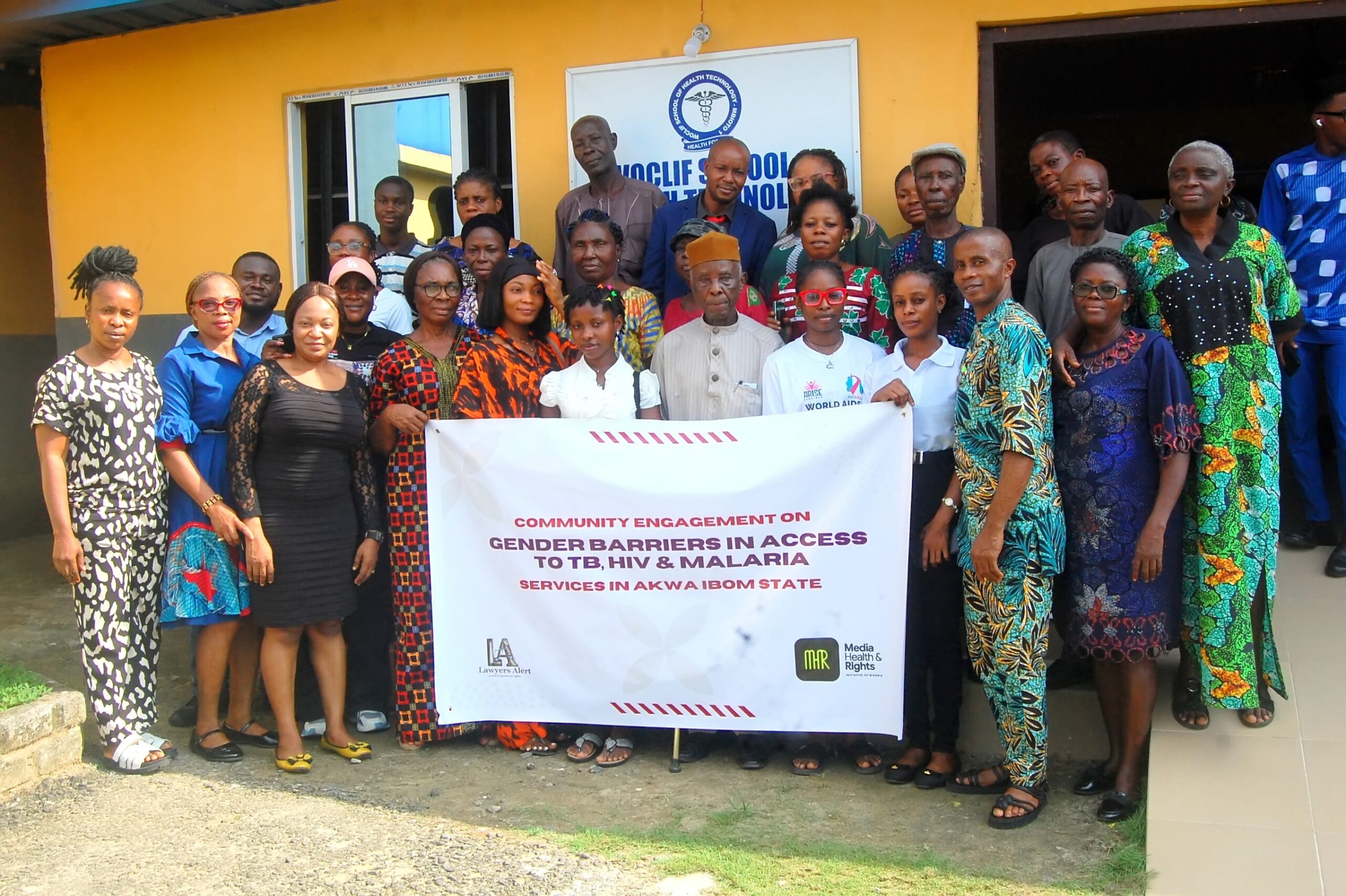
In a sensitization and advocacy campaigns to different communities in Akwa Ibom State, Non Governmental Organizations and other stakeholders have called for the breaking of longstanding gender barrier and better accessibility to medication and care for those suffering from Tuberculosis TB, Human Immunodeficiency Virus HIV, and malaria.
The engagement, organised by Lawyers Alert in partnership with the Media, Health & Rights Initiative of Nigeria (MHR), was coordinated by community partners in each of the locality the sensitization and advocacy took place, namely: Women and Community Livelihood Foundation (WOCLIF), Vitonia Lead Foundation, and the Milestone Initiative for Human Rights and Empowerment all contributed in no small measure to the campaign.
Community leaders, health workers and residents during interactions lamented over the pitiable, painful and horrifying experiences they go through just to access care in critical health sectors especially for sufferers of TB, HIV and Malaria.
The Executive director of WOCLIF, Mrs. Uduak Umoh while speaking with participants at the Etim Ekpo campaign, noted the disconnect between policy and practice, emphasizing on key gender-specific obstacles such as cultural norms, stigma, economic dependence and limited decision-making power that disproportionately hinder women’s access to care.
Participants gave detailed instances of their individual experiences on gender based barriers that continued to restrict access to free TB, HIV, and Malaria treatments, despite their official availability in the state. although treatments are officially free, many residents still struggle to access them, particularly where HIV prevalence is high, and TB and malaria remain pervasive.
Comrade Etininyene Offongekpe, Supervisor for Health in Etim Ekpo, acknowledged the depth of the issues, “When we came into the office, we saw dilapidated facilities. We are planning to rehabilitate many. We will include training, awareness, and a friendlier medical environment in the budget,” he said.
Chief Friday Okon, Village Head of Utu Etim Ekpo, pointed out the repeated disappointments experienced by villagers who arrive at health centres only to meet empty shelves and no staff. He pledged community-level sensitization despite these setbacks.
In Etinan, residents outlined practical strategies to address these gaps during a Community Engagement on gender violence and co-designed solutions to persistent healthcare access challenges.
Speaking during the group participatory discussion Esther Moses, representing women’s groups, detailed how transportation difficulties, stigma, misconceptions about free services, and reliance on traditional remedies continue to dissuade many residents from seeking formal care. Participants recommended door-to-door awareness, improved health workers attitudes, and increased staffing at health facilities as priority actions.
Asserting how these gaps affects the youth, Miss Blessing Okoi, wrapped her thoughts around the fear of stigma, unfriendly health facilities and low health education as major barriers for young people. She solicited for the establishment of youth-friendly centres and support groups to encourage early and sustained engagement with services.
lAn health worker in the community, Nurse Ukeme Anselem, while highlighting inadequate infrastructure, negative attitudes of health providers and commodity shortages, recommended mass recruitment and regular training of health personnel.
Obong Godwin Williams, secretary Village Council of Mbioto Community, who spoke on behalf of the men’s group, called for stronger community-led publicity on available treatments and efforts to dispel myths such as misconceptions around how TB is transmitted and the proper use of malaria prevention tools like insecticide-treated nets.
A representative of Milestone Initiative for Human Rights and Empowerment, Victoria Ikpat in her assessment said the engagement is part of a wider intervention that spans LGAs. “The communities have told us the barriers. What we hope to achieve is more advocacy and awareness so people know these treatments are free.” She added that, evaluation of the progress attained so far will be critically ascertained through further consultation.
Across both engagements, the conversation went beyond identifying challenges to proposing community-driven solutions. Which includes: Strengthening community awareness and sensitisation campaigns about the availability of free treatments; Rehabilitation and equipping of primary health facilities; Deployment and re-training of health workers; Door-to-door outreach similar to immunisation campaigns; Improved confidentiality and youth-friendly care models; Engagement of traditional and religious leaders in health education; and Greater accountability and monitoring of free treatment services.