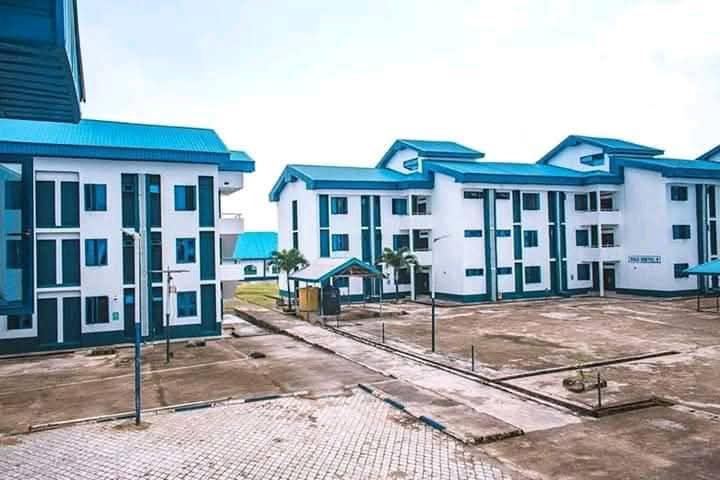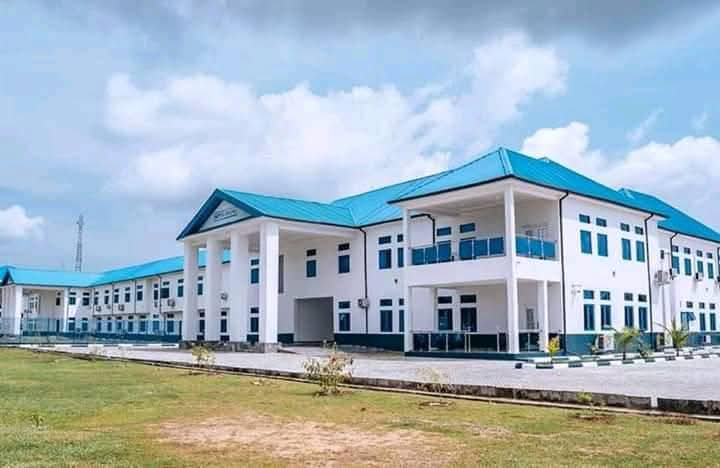
The first part of this report traced the long and arduous journey of the University of Maritime Studies, Oron (UMSO), from the germ of an idea to a legislative reality, through years of historical advocacy, stakeholder engagement, legislative manoeuvring and persistent agitation, until the University of Maritime Studies, Oron Act was eventually passed and assented to by former President Muhammadu Buhari.
That assent, which ought to have marked the turning of the key in the lock, opening the door to a new chapter in Nigeria’s maritime education and human-capital development, was, in many respects, only the beginning of another journey. For while the ink may have dried on the Act, the full promise of the law depends not merely on its existence in the statute books, but on the political will, administrative commitment and institutional machinery required to breathe life into its provisions. Thus, from the triumph of enactment emerges the more sobering question: what, in practical terms, has followed the fanfare of assent?
This part, therefore, moves from the theatre of legislation to the terrain of implementation, where laws encounter the realities of bureaucracy, funding, policy priorities and institutional inertia. It examines how far successive governments have travelled in translating the provisions and aspirations of the UMSO Act into tangible institutional structures and outcomes. Perhaps more importantly, this part examines what has stood in the way of that journey.
The story is no longer simply one of what was promised, but of what has been delivered; not merely of the doors that were opened by legislation, but of those that have remained stubbornly ajar. Between the promise of an institution conceived to strengthen Nigeria’s maritime education and the reality of its implementation lies a landscape of milestones, missed opportunities, bottlenecks and unanswered questions. Watchmanpost Online editor JOSEPH ATAINYANG presents a documentary trail of government bureaucracy that only serves as academic exercise, instead of translating to tangible results, the full implementation of UMSO.
Post-enactment formalisation of UMSO
The University of Maritime Studies, Oron (Establishment) Act, 2022, after being passed by the Senate on 7 July, 2022, and the House of Representatives on 8 December, 2022, respectively, was officially conveyed to the President through a memo by the Clerk to the National Assembly, Ojo O. A. on 17 January, 2023. Upon this memo, the President took action, and assented to the Bill on 16 February, 2023.
Just 24 hours later, the Chief of Staff to the President, Prof. Ibrahim A. Gambari, on 17 February, 2023, communicated the presidential assent to the National Assembly, through the Clerk, in a letter entitled, “Re: University of Maritime Studies, Oron (Establishment) Bill, 2022.”
“I hereby return two (2) copies duly conveying Mr President’s assent and seal of the Federal Republic of Nigeria”, said the letter, which copied the Permanent Secretary, State House; Attorney-General of the Federation, and the Secretary to the Government of the Federation.
Six days later on 23 February, 2023, the Clerk to the National Assembly issued a correspondence addressed to the Chief Registrar, Supreme Court of Nigeria, on the subject, “Enrolment of Act of the National Assembly”. The letter intimated the Supreme Court of the presidential assent to the UMSO Act and urged the Court to “enrol and retain” the original copy of the Act in its records.
The UMSO Act was therefore enrolled and officially published in the Federal Government Gazette on May 15, 2023. Having signed the UMSO Bill into law, with all formalisation steps achieved during his tenure, it becomes conclusive that the Buhari Administration, though did not implement the verbal pronouncement by the Jonathan Administration, succeeded at erecting the legal status of the University of Maritime Studies, Oron.
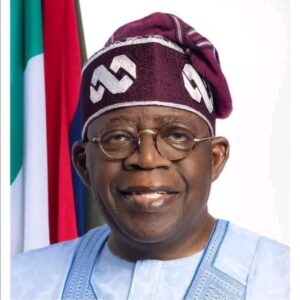
However, the Tinubu Administration took a major step towards actualising UMSO when on 10 October, 2023, the Office of the Secretary to the Government of the Federation wrote to relevant government ministries, agencies and stakeholders, conveying the assented copy of the Act for their necessary actions. The letter, endorsed by Dr Nnamndi Maurice Mbaeri, Permanent Secretary, General Services, Office of the SGF, was separately addressed to the Honourable Minister, Federal Ministry of Education; Honourable Minister, Federal Ministry of Marine & Blue Economy, Oro Stakeholders’ Forum for the Actualisation of the University of Maritime Studies, Oron, among others.
Initial government steps towards UMSO takeoff
Indeed, the federal government could be said to have taken intentional approaches towards the takeoff of the University of Maritime Studies, Oron. A number of actions undertaken by the Federal Ministry of Education, the National Universities Commission, among others, support this conclusion.
The Federal Ministry of Education, in a correspondence to the National Universities Commission dated 27 February, 2024, sought nominations for an interministerial assessment visit to the institution. The letter was endorsed by the Director of University Education, Ministry of Education, Mrs R. G. Ilyasu, on behalf of the Honourable Minister of Education, and addressed to the Executive Secretary of the National Universities Commission (NUC).
In its response dated 4 March, 2024, the NUC through a letterappended by the Director, Directorate of the Executive Secretary’s Office, Mr John Mairafi Ahmadu, and addressed to the Honourable Minister of Education, complied by listing the nominees. A similar request sent to the Federal Ministry of Marine & Blue Economy, also received prompt response, setting the stage for the tripartite visit to the defunct Maritime Academy of Nigeria, Oron.
Consequently, the committee visited the institution, to execute its mandate from Monday, 20 May, to Friday, 24 May, 2024. Tasked to “carry out a detailed inventory and appraisal of all existing physical facilities in terms of adequacy, quality and relevance for the degree programmes”, and to “conduct a comprehensive audit of both academic and non academic staff….” the committee set out to work.
Official records from the Federal Ministry of Education show that the tripartite committee was made up of eight members namely: Mrs R. G. Ilyasu, Team Lead; Mr. P. E. Okpe, Secretary; Mrs J. N. Akpa and Mr. A. A. Amoo, all from the Federal Ministry of Education. Also, while Engr Abraham Chundusu and Mrs Ajileye Titilayo were from the National Universities Commission, Dr Selia Ekanem and Mr. M. Y. Sagir were nominees from the Federal Ministry of Marine & Blue Economy.
The committee, after a full assessment of the infrastructures and facilities/equipment in the institution said, “The overall physical infrastructure on ground at the Maritime Academy of Nigeria, Oron, sufficiently qualifies for the commencement of academic activities by the newly converted University of Maritime Studies, Oron.” As part of its recommendations, the Committee urged, “The Federal Government as a matter of urgency should appoint Principal Officers for the University, in line with the extant provisions, especially a Vice Chancellor with a bias in Maritime related studies.”
Evidence of institutional recognition
There is enough reason to believe that the federal government of Nigeria has truly recognised the existence of the University of Maritime Studies, Oron. Although the institution still operates as MAN, Oron, with an acting Rector, Dr Kelvin Okonna overseeing the day-to-day running of the school, instead of a duly appointed vice chancellor and a required governing council, there is no doubt of the government’s knowledge of its existence.
On 11 February 2025, the Director, Academic Planning, on behalf of the Executive Secretary of the National Universities Commission, wrote to the Permanent Secretary, Federal Ministry of Education, stating that the Commission has updated its records, listing UMSO as an approved and recognised universities in Nigeria. The correspondence noted that the Commission has taken necessary steps to approve takeoff programmes to ensure the institution smoothly commences academic programmes recognised for its status.
The above correspondence was a sequel to a letter by the Oro Stakeholders’ Forum for the Actualisation of UMSO, addressed to the Secretary to the Government of the Federation dated 4 February, 2025. The letter endorsed by Sir Asuquo Inuikim, Prince Utin Ntofon and Chief Benedict Ukpong, reminded the SGF of an earlier letter dated 10 August 2024, in which the group, appealed to the President to amend constitution of a Governing Council for UMSO. They sought the intervention of the SGF in facilitating the appointment of a VC, principal officers, as well as a Governing Council for the University.
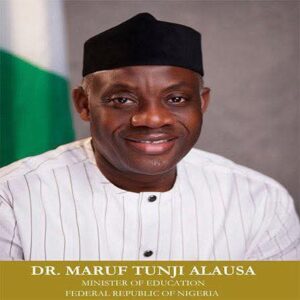
Meanwhile, the Federal Ministry of Education had written directly to President Bola Ahmed Tinubu on 26 February, 2025, on the subject, “Appointment of Principal Officers for the University of Maritime Studies, Oron”. The Honourable Minister, Dr Tunji Alausa who endorsed the correspondence listed major progress made in the implementation process of the UMSO Act, including the report of the Inter-Ministerial Assessment Committee report. He urged Mr President to appoint an additional external council member, a vice chancellor and principal officers for the smooth running of the new university.
On 24 March 2025, the Permanent Secretary, Federal Ministry of Education, wrote to H.E. Adegboyega Oyetola, Minister of Marine and Blue Economy, providing an update on the conversion of the Maritime Academy of Nigeria, Oron, to the University of Maritime Studies, Oron. The letter enumerated the progress made in the conversion process, including a communication to the President to approve the appointment of the VC, Principal Officers and the Governing Council. The letter urged the Ministry of Marine and Blue Economy to support the young University, particularly in the areas of technical expertise and accreditation, to enable it to fulfil its mandate and develop into a globally recognised institution.
Interestingly, on 7 April, 2025, the Joint Admissions and Matriculation Board (JAMB) in a letter endorsed by the Director of Admissions, Mohammed A. Babaji, invited MAN Oron for “An Interactive Meeting with the Board (JAMB) on Admission Processing.” The letter which was addressed to the Vice-Chancellor, University of Maritime Studies, Oron, and was slated for Monday, 14 April, 2025 aimed to “introduce UMSO to the regulatory framework guiding admissions processing on the Board’s Central Admission Processing System (CAPS) and the Integrated Brochure and Syllabus System (IBASS).”
Alleged non-compliance with UMSO Act
In spite of progress made by the government of the federation to ensure the full implementation of the UMSO Act, there are enough grounds that compromise or administrative bottlenecks still stand in the way of the university’s operation. WatchmanPost reports that a correspondence addressed to the Chairman, Senate Committee on Legislative Compliance entitled, “Non Compliance with University of Maritime Studies, Oron (Establishment) Act, 2022: Complaint Against the Federal Ministry of Marine and Blue Economy, An Appeal for the Immediate Compliance with the Act”, alleges that the Ministry has not complied with the Act.
The letter, endorsed by Abang Mkpandiok Esq, of Atlantic Law Firm, Lagos, on behalf of Oro Stakeholders’ Forum for the Actualisation of UMSO, observed that the Ministry was “still implementing the provisions of the Maritime Academy of Nigeria, Oron Act, Cap M3, Laws of the Federation of Nigeria”. It called on the Committee to compel the Ministry of Marine and Blue Economy to comply with the UMSO Act.
The allegation taken seriously, prompted the Senate Committee to invite the ministry to a crucial meeting. This was contained in a letter dated 31 October, 2024. But in adefence, the Ministry of Marine and Blue Economy, through a letter endorsed by the Director, Maritime Safety and Security, Babatunde H. Bombata, denied the allegation. Dated 29 November, 2024, the letter said, “The Ministry has since directed the Maritime Academy of Nigeria, Oron to strictly comply with the New Act upgrading the Academy as University of Maritime Studies and commence transition accordingly….”

Regardless of the denial however, it is not the first time the Ministry of Marine and Blue Economy would oppose the UMSO Act. Of course, in all occasions in the life span of the Bill, the Ministry of Transport now Ministry of Marine and Blue Economy, vehemently opposed the Bill. Both at the Senate and at the House of Representatives, the Ministry believed the institution could only be upgraded to a degree awarding institution.
While working closely with the Nigerian Maritime Administration and Safety Agency (NIMASA, an agency under the ministry), the Ministry has a familiar excuse that the standard of International Maritime Organisation (IMO) would be lost if the Academy becomes a university. The Alumni of the Maritime Academy of Nigeria, Oron (AMANO) would also hold the same opinion. These were the arguments advanced up to the presidency before assent.
But for the Nigerian Institute of Electrical and Electronic Engineering (NIEEE), the Nigerian Institute of ICT Engineers (NIICTE) and the Council for the Regulation of Engineering in Nigeria (COREN), the transition of MAN Oron to UMSO would inject near sufficient engineering skills into the Nigerian Economy. The trio believed the transformation would also advance technical and hands-on skills and position itself as a blue economy enabler in the country.
The same position severally advanced by the Ministry of Marime and Blue Economy, NIMASA, AMANA is also held by some who are privileged to hold the fort in the Academy. The Chairman of the Governing Council of the Maritime Academy of Nigeria, Engr. Kehinde Akinola, recently cautioned against the ongoing push to convert the specialised maritime institution into a conventional multidisciplinary university, stressing that such a move must not undermine its core mandate. Akinola was speaking at the academy’s first quarter 2026 Citizens and Stakeholders’ Engagement, emphasising that MAN’s greatest strengths are its specialized programmes, strong industry linkages, global recognition and hands-on training.
He stated, “Converting the academy to a university would undoubtedly bring changes, but we must consider whether this shift would enhance or dilute our focus.” He urged stakeholders to leverage the academy’s existing strengths to promote innovation and growth, rather than dilute the institution’s specialised character and international standing.
Akinola further stressed that any transition must remain consistent with the academy’s strategic objectives and international maritime training obligations, particularly the Standards of Training, Certification and Watch keeping for Seafarers (STCW) 1978, as amended, established by the International Maritime Organisation (IMO). He said, “Our strength lies in our specialized programmes, industry connections, global recognition, and hands-on training. Let us leverage these strengths to drive innovation and growth.”
While the debate over the university conversion continues, the academy’s management highlighted ongoing efforts to strengthen industry partnerships and cadet training, including an agreement with NLNG Shipping and Marine Services Limited that has provided onboard training opportunities for 43 cadets.
A ‘bold’ step towards UMSO abrogation
The struggles for UMSO remain interesting for many reasons. While a law is meant to be put to use after enactment, the University of Maritime Studies Oron (Establishment) Act, 2022 remains in its class, a back-and-forth legislation which must not see the light of the day. This explains why such a legislation could remain for about four years without actualisation, but could have suffered infanticide after two years of birth.
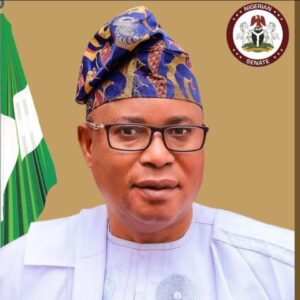
Just like the views of the Ministry of Marine and Blue Economy, NIMASA, AMANA, and the Prochancellor, it became an obvious ambush when the UMSO Act was being repealed in the Senate. The Bill for an Act to Repeal the University of Maritime Studies, Oron Act, 2022, and Enact the Maritime Academy of Nigeria Oron, and for other Related Matters, 2025 (SB.792) passed First Reading at the Senate. It almost succeeded in resurfacing for a Second Reading on Tuesday, 1st July, 2025. The Bill was sponsored by Senator Eshilokun, Sanni Wasiu. Eshilokun Sanni currently his first term as the Senator representing Lagos Central district in the 10th National Assembly. He is the Chairman, Senate Committee on Marine Transport.
Fortunate may have smiled on UMSO when Oro Stakeholders’ Forum on 30 June, 2025, submitted a request to the office of the Senate President. The letter endorsed by Sir Asuquo Inuikim, Prince Utin Okung Ntofon and Chief Benedict Ukpong requested the prompt intervention of the Senate President, Senator Godswill Obot Akpabio for UMSO’s immediate takeoff.
The letter of request may have become the only saving grace for UMSO as its planned abrogation came to a halt. Instead, the same category of stakeholders, joined by the former PDP State Chairman, Arc Otu Ita Toyo, met the president of the Senate in his office and the National Assembly Headquarters.
The next part of this report focuses on further interventions by stakeholders of the host community to keep the UMSO dream alive.