The recent pledge by President Bola Ahmed Tinubu to approve the Ibom Deep Seaport project in Akwa Ibom State has divided pundits across the state and beyond, leaving Governor Umo Eno dismissive of critics’ positions and, defending the President’s commitment to the airport, deep seaport projects.
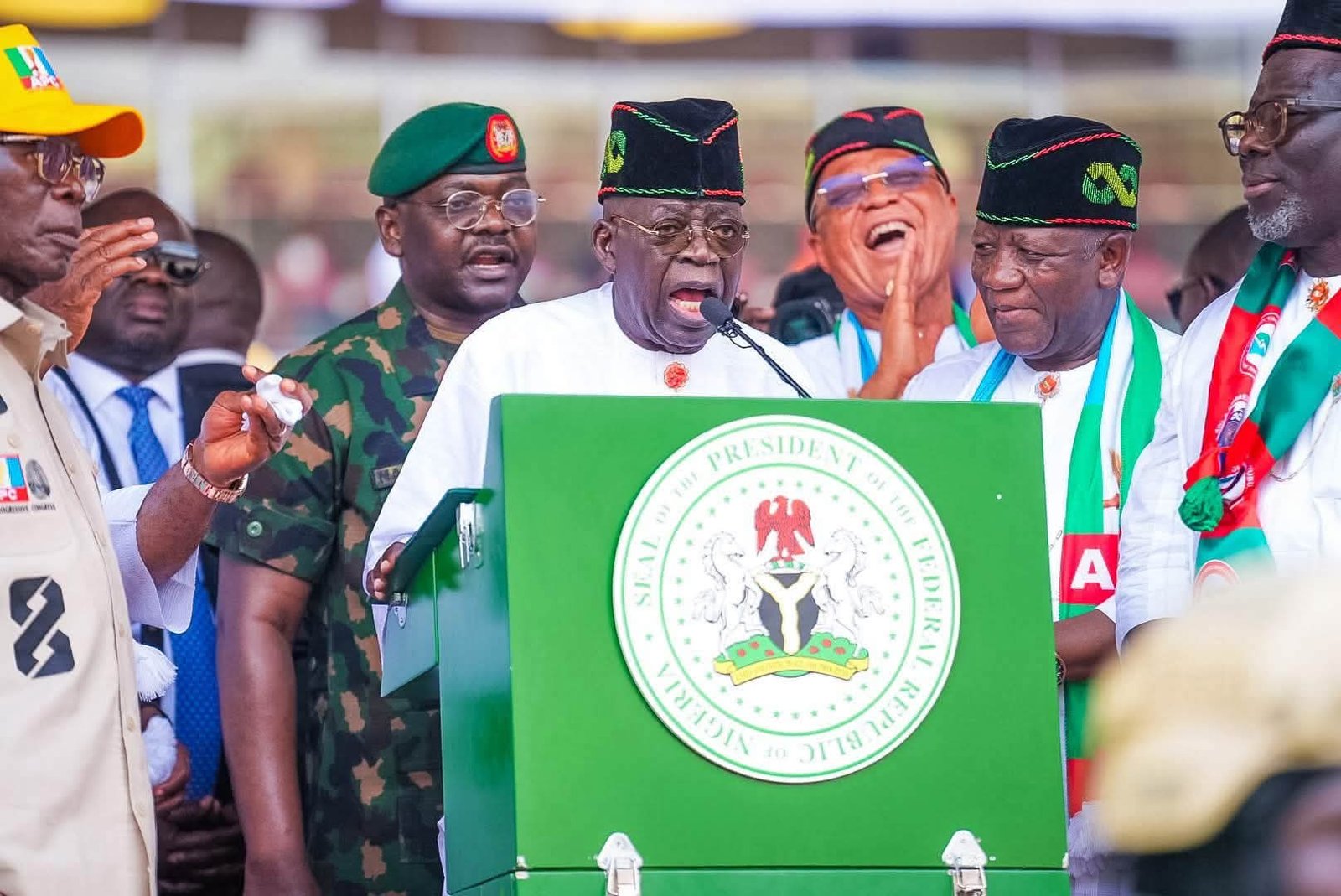
Akwa Ibom was agog on Friday, November 6, 2026, as it received President Bola Tinubu who was on a presidential campaign to the state. WatchmanPost’s senior reporter Emmanuel Ntekim, who covered the electioneering campaign, here reports matters arising from the events.
The All Progressives Congress (APC) presidential campaign rally at the GodswillAkpabio International Stadium, Uyo, has stirred fresh political debate and division among stakeholders and residents of Akwa Ibom State. The controversy follows President Bola Ahmed Tinubu’s pronouncements on the Victor Attah International Airport and the proposed Ibom Deep Seaport.
At the rally, President Tinubu announced his approval of international flight operations at the state-owned Victor Attah International Airport and pledged Federal Government support for the actualisation of the Ibom Deep Seaport.
He reiterated his commitment at a state dinner organised in his honour by the Akwa Ibom State Government, declaring: “Keep your promise, I will keep mine. There will be Akwa Ibom Deep Seaport. God bless you.”
The declarations have drawn divergent reactions. Critics question the authenticity and significance of the approvals, while supporters of Governor Umo Eno describe them as important political and institutional commitments towards realising the state’s long-standing development projects.
Those who have criticised the president’s pronouncements include Barrister Manfred Ekpe, human rights activist InibeheEffiong, barrister EwaOkpo, a professor of political science, University of Uyo, (who doesn’t wish his name mentioned) and Dr. Friday Ukoh.
On the other side, Emmanuel Nicholas, Richard Peters, KufreEkpoh and other supporters of the administration on social media have defended the president’s commitment, insisting that the announcement should be understood within the context of Federal Government support for the projects.
Critics Question Presidential Pronouncement
Barrister Manfred Ekpe described the president’s declaration on the Ibom Deep Seaport as a political prank, suggesting it was meant to excite Akwa Ibom people.
“I have reasons to believe that very perverse people may have whispered to the President to claim the approval of the Ibom Deep Seaport in order to excite AkwaIbomites. If so, that was a very big mistake, as no one has been fooled,” he said.
Ekpe also expressed reservations about party loyalty ahead of the 2027 general elections, arguing that Nigerian political parties are largely driven by similar interests.
On the president’s declaration on the international status of Victor Attah International Airport, Ekpe argued that the airport had handled international operations under former Governor GodswillAkpabio. He recalled that an aircraft operated by Sky Airlines transported about 200 pilgrims from the airport to Ben Gurion Airport, Tel Aviv, Israel, in January 2011, and cited this as evidence that the airport had previously handled international flights.
Similarly, human rights activist InibeheEffiong dismissed the Ibom Deep Seaport as a repeatedly publicised project which, he alleged, successive administrations had used to mislead the people.
According to Effiong, successive governors, including Akpabio, Udom Emmanuel and the incumbent, Umo Eno, had made promises about the project without delivering a seaport. He described it as a political deception, questioned the repeated announcements of approvals, and maintained that Akwa Ibom people deserved concrete evidence of implementation rather than repeated political assurances.
Ukoh Questions Nature of presidential Approval
Dr. Friday Ukoh questioned the specific nature of the approval announced by the President, particularly whether it amounted to authorisation to commence construction or was merely another political declaration.
He argued that the President failed to specify the approval granted, especially regarding procurement and the commencement of construction.
“The question is, what kind of approval has the President given? Is it approval to commence construction? What about procurement? To me, that statement is a political statement, and it has no effect,” he said.
“After this political cycle, nothing may be mentioned about that project again because the President was not specific about the type of approval he has given to an already approved project. Immediately, he did not specify it. To me, it has no approval, and the project will not go beyond where it is.”
Ukoh also raised the proposed 19-metre port depth, which Governor Eno and Senate President GodswillAkpabio had referenced in their comments. He said the emphasis on a 19-metre port requiring no dredging has implications for the project’s location, and reinforces the position that the seaport is sited at Ibaka in Mbo Local Government Area.
Supporters Defend Tinubu, Eno
Supporters of Governor Eno have countered that the President’s pronouncement should not be read as the first regulatory approval of the Ibom Deep Seaport.
According to them, the governor’s request to the president was not for a fresh seaport licence or initial regulatory clearance, but for the Federal Government’s political commitment, institutional backing and cooperation in translating years of planning and regulatory processes into actual construction.
They said the project had passed through several stages of approval under previous administrations, and that the present administration was working to complete the outstanding processes required for construction. For them, the President’s declaration is an important commitment to support the state in moving the project from planning to execution.
Governor Eno, addressing the controversy, said the president’s commitment was meant to give the state the Federal Government support needed to realise the project. He also warned against distractions and protests over the proposed location and naming of the seaport, insisting that such controversies would not be allowed to derail the project.
Ibom Deep Seaport: The Akpabio Foundation
The history of the change of name from Ibaka Deep Seaport (originally conceptualized by the Attah Administration) toIbom Deep Seaport dates back to the administration of former Governor GodswillAkpabio (2007–2015
On 19th May 2008, the administration initiated the concept of the Ibaka Deep Seaport and commissioned preliminary technical studies. It also acquired about 14,400 hectares for the proposed industrial city and secured a Free Trade Zone licence from the Nigeria Export Processing Zones Authority (NEPZA) on 20th October 2014.
It further secured an initial Federal Government approval-in-principle under President Goodluck Jonathan on 11th May 2015. These milestones formed the foundation on which subsequent administrations built their plans for the project.
Udom Emmanuel Administration: Regulatory Milestones
The administration of former Governor Udom Emmanuel (2015–2023) concentrated on advancing the regulatory, technical and financial processes required for the project.
During this period, the state engaged Global Maritime and Port Services (GMAPS) as transaction adviser. The administration completed the Outline Business Case (OBC), which received approval from the Infrastructure Concession Regulatory Commission (ICRC) on 13th February 2018 and from the Federal Executive Council (FEC) on 21st October 2020. It also secured an Environmental Impact Assessment certificate from the Federal Ministry of Environment in 2020.
A major milestone was the FEC’s approval of $2.016 billion for Phase One of the project on 16th December 2020. On 10th May 2021, the Federal Ministry of Transportation issued a Business Guarantee, while Bolloré/PowerChina emerged as the preferred bidder before withdrawing from the process.
Umo Eno Administration: Renewed Push for Actualisation
Since assuming office in 2023, Governor Eno’s administration has continued efforts to advance the project towards implementation.
According to information released by the state government, the administration reviewed existing project documents, engaged new transaction advisers and intensified discussions with potential investors.
On 12th June 2026, Governor Eno reportedly led an Akwa Ibom delegation to Paris, France, for investment discussions with Africa Global Logistics (AGL) and other prospective partners. The Ministry of Special Duties said the engagement was part of efforts to attract the investment and technical partnerships the project requires.
On 19th October 2026, the Commissioner for Special Duties, Mr. Emem Bob, reportedly announced that the Full Business Case (FBC) had received the necessary ICRC and FEC approvals, with the project advancing towards final procurement and the selection of new preferred bidders.
The administration has also highlighted its efforts to protect the approximately 5,129 hectares of land designated for the port against encroachment.
Another development was the receipt, in December 2025, of an updated feasibility study from Dar Al-Handasah Consultants. The study, reportedly funded by the Akwa Ibom State Government at N3.2 billion, updated the 2018 assessment to reflect current construction costs, climate considerations and modern vessel specifications. It reportedly established the project’s technical viability, including an 18.24-metre draught and capacity for vessels carrying up to 13,000 twenty-foot equivalent units (TEUs).
Construction Timeline and Financial Implications
The state government has outlined a proposed implementation timeline. Procurement and financial closure are expected between the first and third quarters of 2027, while ground-breaking and Phase One construction are projected to run from the fourth quarter of 2027 to 2030. First commercial operations are projected for 2031.
The financial requirements remain a major consideration. Total construction cost is put at about $4.6 billion, with Phase One estimated at $2.016 billion. At prevailing exchange rates, this amounts to several trillions of naira.
Supporters of the administration argue that the project is structured as a Public-Private Partnership (PPP), with private investors expected to provide a significant portion of the funding alongside government. They say that expecting the state to finance a project of this magnitude single-handedly reflects a misunderstanding of the financial structure of modern port development, and that Federal Government participation and private-sector investment are indispensable.
Projects Commissioned During Tinubu’s Visit
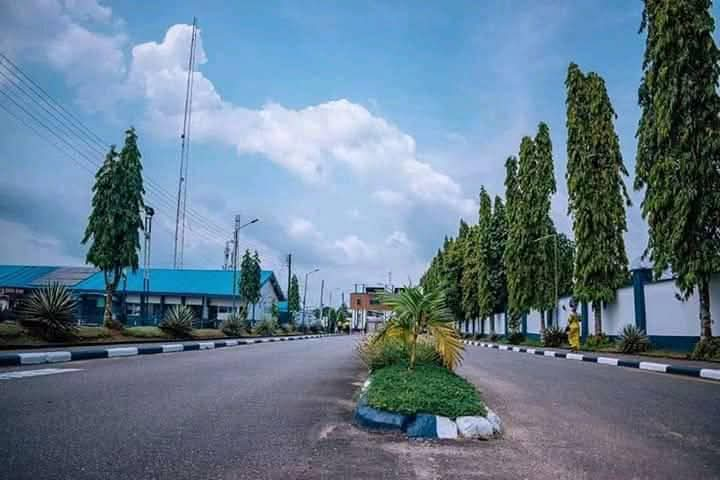
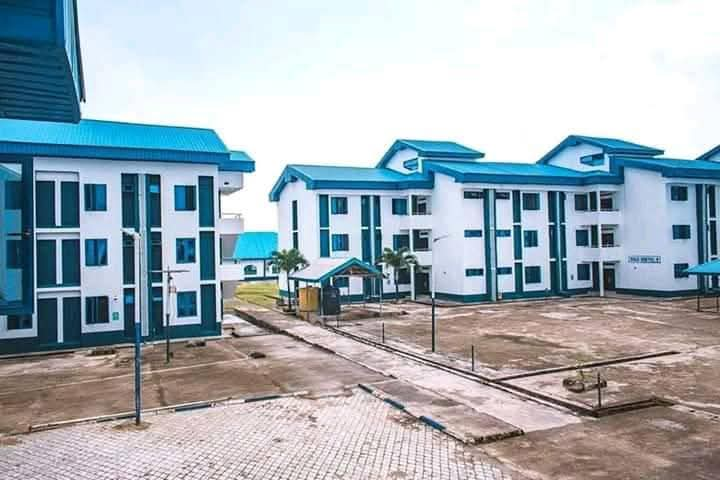
Beyond the controversy over the airport and seaport, the President’s visit featured the commissioning of several infrastructural projects executed by the Eno administration. These include the Airport Hospital and Aviation Village, the NsitAtai–Okobo Road and the 7.868-kilometre Ring Road III Extension.
The President also inaugurated the Governor’s Office Annex, the Command-and-Control Centre, the AkwaGIS Office and the ARISE Palm Resort. The projects formed part of the state government’s presentation of its development achievements and its efforts to attract federal attention and investment.
Between Political Promises and Development Expectations
The controversy has again exposed the political sensitivities around the Ibom Deep Seaport, a project that has been a major development aspiration for Akwa Ibom for nearly two decades.
Critics insist that successive administrations have used the project to generate political excitement without delivering the infrastructure. Supporters argue that the regulatory approvals, feasibility studies, investment discussions and procurement processes show the project is more than political rhetoric.
The central issue is no longer whether the project has received one approval or another, but whether the accumulated approvals and renewed Federal Government commitment will translate into construction, investment and eventual commercial operations.
For the people of Akwa Ibom, the expectation is clear: the seaport must move beyond political declarations and become a functioning economic asset that creates jobs, attracts industries, expands trade and transforms the state’s economy.
Until construction begins, however, the debate between political assurances and practical delivery is likely to remain a major issue in the state’s politics.