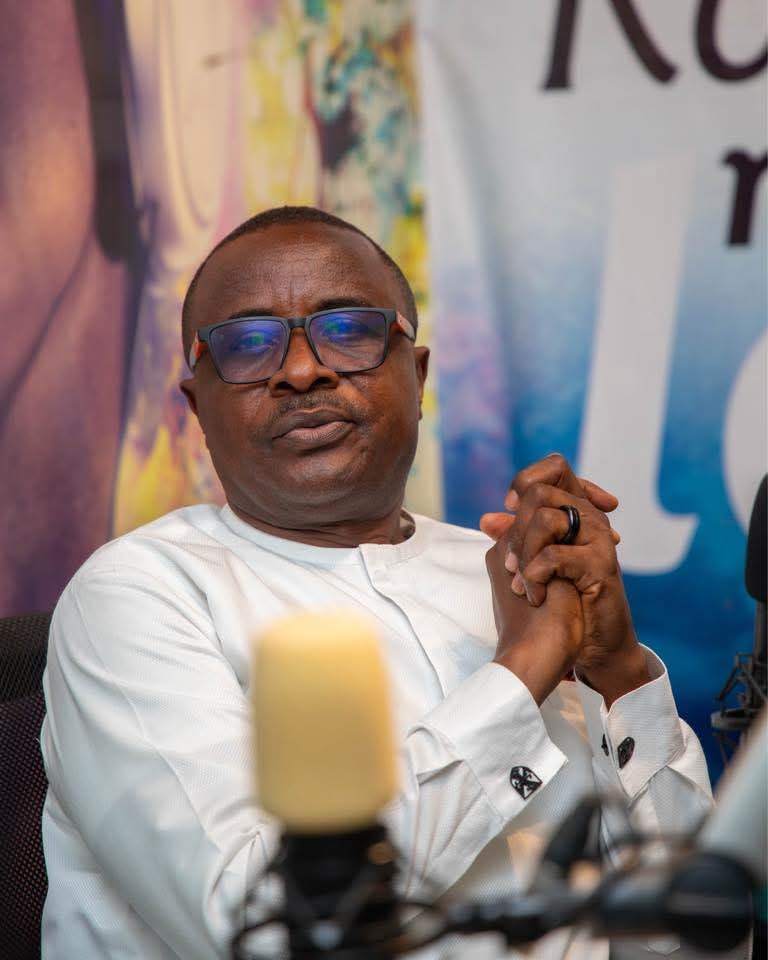
Michael Bush is almost a house-hold name in Akwa Ibom State and his eloquent voice is always a delight to hear on radio. He is a media enterpreuener with an ever rising profile. He has not only ventured into politics but is now seeking the highest office in Akwa Ibom State- the office of the governor. In an exclusive interview, he talked about his vision to occupy the HillTop Mansion come 2027, to WatchmanPost team of Editorial Board Chairman Professor Des Wilson, Editor-in-chief Dr Sunday Antai, Editor Eno Udo and Senior Reporter Emmanuel Ntekim.
You were formerly in the PDP, a platform where you played a coordinating role. What led to your break with the PDP?
I don’t think I have left the PDP ideologically — not yet. I consider the difference between the PDP and the Labour Party to be like the difference between six and half a dozen. The Labour Party is a gathering of social democrats, while the PDP is also a family of democrats. I joined the Labour Party because I felt it would allow me, without legal complications, to pursue my vision of governing Akwa Ibom State. That is why I am in the Labour Party today.
I did not quarrel with the PDP. I did not shut any doors. I did not create chaos or engage in conflict with the party. I believe that, even tomorrow, we will still maintain a cordial relationship.However, I am in the Labour Party because I believe it is the vehicle that can take me to Government House, Uyo, without unnecessary legal battles. That is why I chose the Labour Party, and that is why I am here.
You say you have not left the PDP ideologically because there are similarities, perhaps ideological, between the PDP and the Labour Party. However, the Labour Party, at least from its origins, is associated with workers and social welfare issues.Now that the PDP appears to be in a state of confusion, do you still believe it is the same PDP you once considered similar in ideology to the Labour Party?
That’s a very interesting question. I think the people who are genuinely PDP are still there. Those are the people I prefer to talk about. The other pretenders to the throne have either left or are still posing as peace-loving members while bringing conflict into the party. The real and genuine members of the PDP are still there, and they represent the best of the party.However, I do not want to spend too much of my time discussing the PDP. I would rather focus on the Labour Party because that is where I am today. I wish the PDP well in its journey, even as I have chosen a different route.
Many people say that in Nigerian politics today, there is really no difference between political parties and that they are all the same. How do you intend to align the ideology of the Labour Party with the interests of Akwa Ibom State, especially given that the Labour Party itself appears divided in many ways?
I do not think the problem of political parties is really political ideology. I believe the fundamental problem of Nigeria is the lack of love for the country and love for our fellow citizens.Someone gets into office under Party A and performs poorly. People then conclude that Party B must be better. But when you look around, you find examples that challenge that assumption. Take the Labour Party, for instance. It has only one governor among Nigeria’s 36 states, yet whenever discussions arise about the best-performing governor since 2023, that governor is often mentioned.Is that because of Labour Party ideology? I am not sure. I believe it has more to do with the character and personal values of the individual involved.
What Nigeria needs going into 2027 are leaders with good hearts, leaders who are patriotic and genuinely care about the country and its people.Once we have that, many of our problems would become easier to solve.
Do you think there should be a national question or a state question? In other words, what does Nigeria need now? Are there issues such as unity or restructuring that should take priority?
I think that is the tragedy of our politics. When politicians get to Abuja, they say they are fighting for their states and defending the interests of their people. But when they return to their states, they begin to fight over local government interests. When they get to their local government areas, they fight over clan interests, and when they get to the villages, they begin to fight over family interests. Eventually, even within families, people begin to fight over personal interests.
So, for me, it all comes down to greed.It is not really about a national question or a state question. Take the issue of state policing, for instance. We have operated under a national police structure for decades. Suddenly, because elections are approaching, people are talking about state police as if that alone will solve our an insecurity problems.
The same applies to situations where government officials ask citizens, church members, or community groups to submit their National Identification Numbers or permanent voter card details supposedly for empowerment programmes. If the objective is empowerment, why do you need a voter’s card number?
These are often political strategies linked to elections.In my view, what Nigeria needs is patriotism and genuine concern for fellow citizens. Once leaders begin to care about the people they serve, many of these issues become easier to resolve.People often talk about the huge revenues that have come into Akwa Ibom State over the years. The question many people ask is: where is the money? That, again, points to a lack of concern for the welfare of the people.I want to be a governor who is accessible. If elected, I want to be a governor who answers calls, listens to people, and remains connected to ordinary citizens.
Many politicians speak eloquently before elections but behave differently once they assume office. You have spoken about love for country and love for people as the solution. Do you believe you possess those qualities?
People should examine my life and my antecedents. They should look at my history and compare it with that of others.Whenever I speak, the governor’s team responds with press releases and statements. Yet, not once have they attacked my record or my past contributions. They focus on non sequitor rather than substance.
If there were genuine concerns about my record, they would have raised them already.I encourage Akwa Ibom people to investigate my background, my story, and my history and compare them with those of the current administration.
Can you point to specific examples that people can verify?
People should examine my record and the things I have done to empower others.Many know me as a media entrepreneur, but my work over the past 35 years has gone far beyond the media industry.People can look at those I have mentored and helped develop over the years. They can examine my work in the media space and my activities in philanthropy.There are many examples of leadership and service that people can investigate.
Would it not help to mention some examples so that people know where to begin their enquiries?
I am careful not to publicise acts of charity in ways that, in my view, conflict with biblical principles. I am not going to produce documents listing what I have done for specific individuals or begin naming beneficiaries publicly. However, I can speak in broad terms. Over the last 35 years, I believe I have sponsored the education of thousands of people in one way or another. I have supported many young people, mentored them, and helped them become successful adults. But I prefer not to publicise these things in detail because I do not want to appear immodest.
It is important because you have asked people to examine your record. You also mentioned sponsoring education. What levels of education are we talking about?
I do not keep formal records of these activities. However, many beneficiaries have spoken publicly about them. Some contact me from different parts of the world to remind me that I paid their school fees or supported their education. Even today, I still support students at various levels — nursery school, primary school, secondary school, university, postgraduate studies, and even some studying abroad.
Some critics may argue that people know you mainly for your media work and pastoral activities.
I do not believe elections should be based on how many houses someone has built or how many cars they have given out. The real questions should be: Do I possess the capacity or qualifications necessary to govern? Do I have the mental capacity to manage the office? Do I have the support of the people? What ideas and policies am I bringing to the table? Those are the conversations that matter.Although campaigns have not officially begun, I believe those are the issues that should define the debate rather than personal attacks.
You are preparing to challenge an incumbent governor who controls considerable financial resources and political structures. How do you intend to navigate that reality?
That is not something that worries me. The person who should be worried about elections is the incumbent because, from what we have seen since discussions about the 2027 elections began, governance appears to have taken a back seat while politics and reelection have moved to the forefront.
Everything now seems to revolve around the next election. Take the example of the Ibom Deep Seaport. We heard that the governor travelled to France in connection with the project and announced that discussions were being held with prospective partners and investors. To me, it appears that some of these efforts are intended to create momentum and reinforce public belief that progress is being made on the project. Interestingly, this is the same project that had previously been downplayed politically, only to return to the centre of public discourse as election conversations intensified.
For me, however, the real conversation should not be about political theatrics. It should be about what each candidate is bringing to the table and the solutions they are offering to the people of Akwa Ibom State. I am not worried about political structures or financial muscle because I have lived and worked among Akwa Ibom people for over 35 years. I returned to the state as a young man and have spent decades building relationships and contributing to society. I speak French and can easily get Akwa Ibom people to work our French-speaking neighbours too.
The people know us. They know our records and our histories. That is why I do not like to dwell on how many houses I have built or the number of people I have helped. For me, that is not the issue. The issue is the impact one has made on the lives of people and the value one has added to society. Even my work in the media space alone speaks to my experience and capacity to serve in public office.
You mentioned projects such as the Ibom Deep Seaport and the Science Park. How would your administration approach such projects?
I will be honest with Akwa Ibom people, and that is one reason they should trust me. Take the Science Park project as an example. I am not coming into office pretending that I know everything or that I alone can deliver every project. If there are issues beyond my expertise, I will consult those who know more than I do. For instance, former Governor Victor Attah initiated many of these projects and possesses considerable knowledge about them. Why would I not consult him and ask for his advice?
There are many Akwa Ibom people with expertise in power generation, industrial development, and infrastructure. I will seek their input and involve them in governance. That is the approach I bring to leadership. I am not presenting myself as someone who knows everything. I am presenting myself as someone who is willing to listen, consult, and work with competent people for the benefit of the state.
The current administration, in my view, has not sufficiently encouraged alternative views or criticism. My administration would be different.
Can you give an example?
Take the state broadcasting corporation, AKBC, for example. I worked at AKBC for several years, first as a freelancer and later as a staff member. Today, opposition parties and dissenting voices find it difficult to access the station. That is not healthy for democracy, and it also affects the station commercially because it loses potential advertising revenue.
If elected governor, AKBC will be open to all political parties and all shades of opinion.I am not making unrealistic promises such as placing AKBC on satellite television within 100 days. What I am promising is that it will become a more professional and inclusive public broadcaster that serves all Akwa Ibom people.
Earlier, during the discussion on ideology, you argued that love for country matters more than political ideology. However, Labour Party traditionally identifies with workers and social welfare. If elected governor, what specifically would you do for workers?
When people in government fail to do the right things, citizens naturally begin to look for alternatives. Many people today believe that the current administration has not met expectations and would prefer to see a change in leadership. As for workers, my understanding of workers goes beyond civil servants on the government payroll. The market woman is a worker. The fisherman is a worker. The trader is a worker. The entrepreneur is a worker.
Government often talks about empowerment programmes that provide small grants or loans of N100,000 or N500,000, but in today’s economy such amounts hardly make a meaningful impact. Under my administration, the minimum business support loan for qualified beneficiaries would be significantly larger and designed to genuinely support business growth.
Established businesses that have survived for many years would have access to long-term financing because businesses create jobs and strengthen the economy. As the son of a fisherman, I am particularly interested in supporting fishing communities. It is unfortunate that seafood harvested in Akwa Ibom sometimes becomes cheaper in other parts of Nigeria than in the communities where it is produced. My administration would support local fishermen with access to equipment and financing so that they can increase production and improve their incomes.
What about civil servants?
Improving the welfare of workers goes beyond salaries alone. Working conditions matter because they affect the morale and productivity of employees. I have visited many government offices and ministries and have seen facilities that need improvement. My administration would prioritise creating a conducive work environment for public servants. There are issues relating to emoluments and salary payments, and these must be addressed. Salaries should be paid promptly and predictably. Workers should know that by a certain date each month, their salaries will be in their accounts.
There is also the issue of imprest and operational support for ministries and departments, which, in my view, has become ineffective in recent years. Government institutions should have the resources they need to function efficiently. There would also be greater emphasis on training and professional development. Beyond that, training and retraining programmes for workers must be prioritised. An efficient and motivated civil service is essential for effective governance.
My administration will be guided by an might-point agenda reflected in the acronym “AKWA IBOM.”
A — Access
This stands for access to opportunities and access to government. Today, many public officials become inaccessible once they assume office. As Governor, I want government to be accessible to the people. My official phone line will remain open and available so that citizens can communicate directly with me when necessary.
K — Key
Government should provide people with the keys to a better life — the keys to opportunity, welfare, freedom and prosperity.
W — Waste to Wealth
Waste management is becoming a serious challenge in many communities. Instead of treating waste as a nuisance, we should convert waste into wealth through recycling and other value-added initiatives. At the same time, Akwa Ibom is regarded as a wealthy state, yet many of its citizens remain poor. That contradiction must be addressed.
A — Advancement
This means advancement in technology, infrastructure, education and innovation.
Take the Science Park project, for example. We should bring together those with the expertise to make it work and create opportunities for our young people who are already excelling in technology and innovation. These are aspirations and goals, and while there will be challenges, leadership must have a vision for the future.
I — Industrialisation
Every local government area should have an economic identity and productive enterprise. I would engage communities across the state and identify areas where cottage industries and small-scale manufacturing can thrive, whether in Uruan, Ikono, Eket or any other local government area.
Government should not necessarily own or run these businesses directly. Instead, communities and private investors should take ownership while government plays a supportive role. Such partnerships would create jobs and stimulate local economies.
B — Business
Creating a favourable business environment is essential. We should attract investors while also developing local entrepreneurs through mentorship, training and access to opportunities.
O — Opportunities
Government must create opportunities for employment, skills acquisition and participation in the global economy. I have often spoken about the need to secure our forests and strengthen community-based security structures. Traditional institutions, village heads, clan heads and paramount rulers should play a more active role in local security management. At the village level, youth leaders and community representatives can work with government in intelligence gathering, environmental sanitation and local development initiatives. Rather than shutting down economic activities during monthly sanitation exercises, communities can employ residents specifically to maintain cleanliness and monitor their environments.
This creates employment while improving security and public health. Our young people should also be equipped with the skills needed to compete internationally, particularly in sectors such as oil and gas where Akwa Ibom has natural advantages.
M — Manpower Development. Our greatest resource is our people. We must invest in education, vocational training and adult education programmes to ensure that citizens of all ages can improve their skills and contribute productively to society. We should also revive public health and environmental inspection systems to restore the standards of cleanliness and environmental management for which Akwa Ibom was once known.
Do you have any specific programmes for young people, such as social investment schemes or monthly stipends similar to those introduced under former President Buhari’s administration?
Of course. My entire life has revolved around young people. Those who know me will tell you that youth development has always been central to my work and remains so even today. People often joke that I refuse to grow old because, even in broadcasting, I still play young people’s music and maintain a close relationship with them and their aspirations. Young people will remain at the centre of my administration.
There will be no deception and no false promises. I will continue to empower young people by ensuring they are educated, trained and equipped with the skills needed to succeed. Take education, for example. Why can’t government provide truly free education in the real sense of the word?
My vision is free education from primary school through secondary school and up to the university level. But beyond declaring education free, government must also adequately fund schools. If government fails to support educational institutions financially, schools will inevitably seek alternative means of generating revenue, and the burden falls on parents and students. Therefore, if education is declared free, government must ensure that schools receive the necessary funding and monthly support so they are not compelled to impose additional charges on students and families.
We also need to improve the quality of our learning environment. When you look at many of our campuses today, there is significant room for improvement. I have visited universities abroad and seen academic environments that inspire excellence. I remember visiting the office of Professor Offiong at New York University and being struck by the quality of the facilities and working environment available to academics. I asked myself: why can’t we create similar environments for our professors and researchers here at home? Our lecturers should be well supported and properly remunerated so they can focus on teaching, research and mentoring the next generation.
If you succeed in defeating Governor Umo Eno, would you invite him to contribute in areas where you believe his administration recorded achievements?
I was going to mention tourism, although opinions may differ on the results achieved in that sector. What I intend to establish is something similar to a State Council of Leaders — a body that would meet periodically and provide guidance to the government. I have already made up my mind that if elected, I will serve only one term of four years. I will not seek a second term as governor.
Part of my reasoning is that I do not want to disrupt the existing zoning arrangement among the senatorial districts of the state. Because of that, I intend to bring former governors and former deputy governors together regularly to provide advice and institutional memory.
Even Akwa Ibom indigenes who have held governorship positions elsewhere, including former military administrators, would be invited to contribute their experience. Leadership should not ignore experience simply because political offices have changed hands. So yes, if Governor Umo Eno is willing to participate, I would certainly invite him to contribute in an advisory capacity.
Why do you intend to serve only one term?
I intend to serve only one term of four years. I believe in respecting the existing political arrangements and zoning understandings within the state. My senatorial district has already had its turn, and after four years, I would willingly hand over power to another district in the interest of fairness and stability. Leadership should not become a lifelong ambition.
How prepared are you for the task you have set for yourself — financially, politically and personally?
The pressure and attacks have already begun, so that part does not concern me. I believe I should be judged by my record and by the things I have done throughout my life. The Bible speaks about not putting one’s hand to the plough and looking back. Once I made this decision, I committed fully to it. I am ready. I am super ready. Leadership should not be determined solely by money or financial power.
Sometimes people want to reduce politics to a discussion about who has the larger war chest, but leadership should be about competence, vision and character. Take the example of Barack Obama. His success was not simply a function of personal wealth but of people believing in his ideas and leadership abilities. If people want to sell leadership to the highest bidder, that is their choice.
But if they want someone who can do the job, make them proud, respect them and preserve their dignity, then I believe I am that person. Leadership recruitment in a sane society should be based on ideas, competence and capacity — not simply on money. The question should be: What do you have to offer? What solutions are you bringing? How do you intend to govern? Those are the issues that matter.
So, are you saying you are prepared to lose if the process is determined by money?
Am I supposed to kill myself over politics? Certainly not. I am not prepared to do anything untoward or unethical simply to become governor. I will not compromise my principles or engage in actions that violate my values in pursuit of political office. Before I entered this race, many people believed there would be no serious opposition to the incumbent. I stepped into the arena because I know who I am, I believe I can do the job and I believe I can do it better. I am here to offer Akwa Ibom people an alternative. I will not engage in anything ungodly or improper to win power. But if the people are looking for capable leadership and a better future for Akwa Ibom State, then they can trust me.
Looking at your antecedents in the media, many would say you brought freshness and innovation into the industry. How do you assess the media landscape in Akwa Ibom today?
Well, considering that I am seeking elective office, I should probably say only good things about the media. But speaking seriously, I want to commend media practitioners in Akwa Ibom State — journalists, broadcasters and media professionals——-who have remained steadfast and committed to their profession despite the challenges.
What concerns me, however, is the increasing tendency for some individuals in the media to become closely aligned with political interests to the extent that their independence is compromised. A free and independent media is essential for democracy and good governance.
Recently, I saw reports attacking my emergence as the Labour Party governorship candidate. I viewed some of those reports as politically motivated rather than objective journalism. That said, I have great respect for media professionals who remain honest, courageous and committed to the ethics of journalism. Those are the people I celebrate, and they are the people I look forward to working with if given the opportunity to serve.
You have repeatedly said you intend to work closely with young people.
Yes, certainly with young people, women, elders and every segment of society. However, regarding young people specifically, one concern I have is that many have become disoriented by the political culture that has developed over time.
Many young people now seem conditioned to expect financial inducements before participating in political activities or community service. How would you address that and bring about reorientation?
That is an important question. Akwa Ibom is largely a government-driven society. Leadership has enormous influence over public attitudes and behaviour. When leaders set standards and lead by example, people often respond positively.
For instance, if a governor demonstrates humility, discipline and respect for the law, those values gradually filter through society. One of the things that troubles me today is the growing disregard for order in public life. You see traffic laws ignored, public spaces abused and a culture of impunity developing in some areas. If I become governor, my administration will lead by example.
My convoy will not ignore traffic lights or violate traffic regulations simply because we occupy public office. Public office should not place anyone above the law. If leaders obey the rules, it becomes easier to encourage citizens, especially young people, to do the same. Leadership by example remains the most effective form of reorientation.
Can you, like Donald Trump, overcome the political establishment despite being viewed as an outsider?
People often discourage others from attempting difficult things by telling them that it cannot be done. I heard similar things when I entered the media industry. Yet, I went on to introduce innovations and contribute meaningfully to broadcasting in Akwa Ibom and Nigeria. I became the first Nigerian broadcaster to host a one-hour live programme every Saturday on the network service of Radio Nigeria.
Those experiences prepared me for the challenges of public leadership. As for the establishment, institutions are ultimately built and sustained by people. I simply continue pushing forward. I believe I will become the next Governor of Akwa Ibom State. When I first declared my intention, many people did not believe I could emerge as the Labour Party candidate. Today, I am the party’s candidate.
If I could overcome those odds, then I believe greater achievements are possible. I rely on the prayers, goodwill and support of the people of Akwa Ibom State. Ultimately, the people will compare administrations, assess performance and decide who best represents their aspirations for the future.
You are in the Labour Party, but the party has been described in some quarters as being divided by factions. Some argue that there could even be multiple claimants to the party’s governorship ticket. How do you respond to that?
I do not intend to dignify those claims with too much attention because, as far as I am concerned, the process that produced me as the Labour Party governorship candidate was clear and transparent. Before joining the Labour Party, I had sought to pursue my ambition through the PDP. I went to the PDP national headquarters in Abuja with the intention of obtaining nomination forms. When that did not work out, I moved on and joined the Labour Party. I went to the national headquarters of the Labour Party, purchased my nomination form through the official process and paid the required fees into the party’s designated account.
Thereafter, I was invited for screening and participated fully in the exercise. I am aware that there were other aspirants who also sought the party’s ticket. However, the screening committee made its decisions based on the party’s internal guidelines and processes.
In my own case, I was screened and officially cleared by the party to contest. I understand that some individuals who were not cleared exercised their right to appeal, but the party maintained its position after reviewing the matter. For me, therefore, the issue is straightforward: the party followed its procedures and reached its conclusions.
On the question of party leadership in Akwa Ibom State, I sought clarification directly from the national leadership of the party. I met with the national leadership and was informed that the recognised state leadership of the party in Akwa Ibom is headed by Obongawan Freena Akpanusung. That is the leadership structure that I recognise and work with.
As far as I am concerned, there is only one recognised state executive of the Labour Party in Akwa Ibom State and only one officially recognised state chairman. Other groups or individuals may choose to identify themselves differently, but my position is based on the recognition and directives of the party’s national leadership.
Most importantly, I was screened, cleared and subsequently ratified by the national body of the Labour Party as its governorship candidate for Akwa Ibom State. That remains my understanding of the situation and the basis of my confidence going into the election.
Any other claims or structures are matters for those making such claims and not for me to address. I remain focused on presenting my vision to the people of Akwa Ibom State and preparing for the election ahead.