Moved by concerns to get more women into the nation’s legislative houses, the National Assembly (NASS) is proposing 74 additional seats in NASS (37 per chamber) and three reserved seats per state legislature for women across the country.
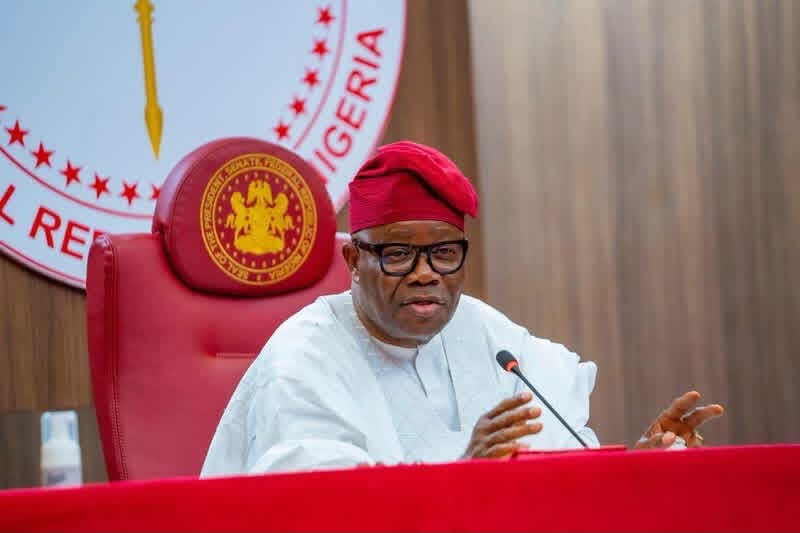
The proposal was made public by Senate Leader Opeyemi Bamidele on 2nd November at the 2026 Law Week organised by the International Federation of Women Lawyers (FIDA), Ekiti State Chapter, according to The Guardian.
Bamidele, who doubles as Vice Chairman of the Senate Committee on the Review of the 1999 Constitution, reportedly said the proposal was part of the ongoing review of the Constitution.
He explained that, if carried through, the proposal would not displace existing elected representatives. Under the proposed breakdown, 37 seats would be added to each chamber of NASS, giving every state and the Federal Capital Territory (FCT) one additional representative in both the Senate and the House of Representatives.
“A Bill for an Act to alter the provisions of the Constitution of the Federal Republic of Nigeria, 1999, to provide for special seats for women in the National and State Houses of Assembly and for related matters is receiving our attention at the National Assembly,” he said.
He added that this followed extensive consultations and consensus-building, noting that the National Assembly had started the constitutional review process early to allow for wider participation.
“The proposal, as it stands, is meticulous in its design. It seeks to add 37 seats in the Senate and 37 seats in the House of Representatives. This suggests that if finally approved, each state of the federation, including FCT, will have one additional seat in each of the Houses of the National Assembly,” he said.
He stated further: “This arrangement is proposed to run for a period of 16 years, four electoral cycles, before a comprehensive review. This is a sunset clause designed to ensure sustainability and to allow for the organic development of a more inclusive political culture.
“We are actively and strategically engaging with the State Houses of Assembly, as their concurrence is a constitutional sine qua non for bringing this reform to fruition.”
Bamidele said the special seat initiative “is not a partisan endeavour. It is a historic imperative. The rationale is anchored on a simple, yet profound, principle of constitutional law: the foundational precept of representative democracy. A democracy that systematically excludes over half of its population from the decision-making tables that determine their futures is, at best, a flawed democracy and, at worst, a veiled oligarchy.”
He also called for stronger legislative measures to support women, children and persons with disabilities through improved healthcare, education and social protection, while acknowledging advocacy by senior government figures, including First Lady Oluremi Tinubu.
“We were mindful of the reality that the state must intervene to provide a robust safety net where the market and tradition fail. This recognition is translated into legislative support for healthcare initiatives, educational access, and social protection programmes that are meticulously targeted at the most vulnerable demographics: our women, our children, and persons with disabilities,” he said.
On the protection of women and children, Bamidele said Nigeria’s laws must address emerging threats and provide effective protection for victims of abuse. He said justice should be more than “a promise merely expressed in the Constitution or a provision enshrined in our statute books. Rather, it must be accessible, affordable, timely, and effective.
“A woman who suffers domestic violence must be able to seek protection without intimidation or social condemnation. A child who experiences abuse must be heard, protected from further harm, and provided with appropriate support.
“Victims must have access to legal assistance, medical care, and psychosocial services, while perpetrators must be held accountable in accordance with due process and the rule of law,” the Senate Leader said.
The event was attended by, among others, the Speaker of the Ekiti State House of Assembly, Adeoye Aribasoye, and the Chairman of the House of Representatives Committee on Information and National Orientation, Steve Fatoba.