This voyage has lingered like an epic song, guided by something stronger than the muse. We have traversed the decades of ideation, incubation, and then the stillbirth of UMSO. Regardless of the legislative success, the kickoff of the university became another long year of waiting. Having previously captured the series in the first three parts of this report, Joseph Atainyang in this last part looks at the UMSO Act itself, reports what appears as existing facilities in the university, the four years of illegal budgeting, litigation and then the confessions of government functionaries.
A glance at UMSO Act
There have been concerns that UMSO has no capacity to maintain specialised status when it fully kick-starts university activities. These concerns appear scary, taking directly from how the promoters of the narrative put it. But an independent observation of the spirit and letters of the UMSO Act presents entirely different perspectives.
Section 2(a-d) outlines the objectives of the University. The UMSO Act establishes a distinctive legal and academic framework for the development of a specialised maritime university. Its programmes are fundamentally different from the conventional, broad-based offerings of a general university. Its provisions envisage an institution dedicated to producing highly skilled personnel for the maritime, shipping and allied sectors through courses of instruction and training in marine technology, nautical science, marine engineering, shipbuilding, maritime management and other related disciplines, at middle, undergraduate, postgraduate and professional levels.
The Act further contemplates the award of the University’s own degrees in accordance with standards prescribed by the National Universities Commission (NUC), while creating an environment for the advancement of learning, applied research, scholarship and professional capacity-building in shipping and maritime sciences. This specialised mandate gives the University considerable potential to develop academic programmes that are industry-driven, competency-based and responsive to the technical and professional requirements of the merchant navy and the wider maritime economy.
Beyond conventional classroom instruction, the statutory objectives contemplate practical and applied learning in areas such as navigation, piloting, marine engineering, hydrography, marine safety and security, marine insurance, ship management, port operations and maritime technology, thereby enabling the University to function as a critical pipeline for professionally competent manpower in a sector where specialised knowledge, technical proficiency, regulatory compliance and operational competence are indispensable.
The potentialities of the UMSO Act, however, extend beyond the provision of specialised degree programmes to establishing the University as a national and international centre of excellence for maritime knowledge, innovation, research and technology transfer. The statutory mandate to undertake postgraduate education, applied research and capacity-building, and to facilitate the sharing of maritime technology with other institutions, positions the University to become a hub for solving practical problems affecting shipping, ports, marine transportation and the maritime environment. Particularly significant is the Act’s emphasis on the efficiency of national and international shipping and on the protection of the maritime environment. This includes the prevention and control of marine pollution and air pollution from ships. This creates scope for interdisciplinary and professional programmes that respond to emerging challenges in maritime safety, environmental sustainability, maritime security, port efficiency, marine pollution control, ship technology and the changing technological demands of global shipping.
The University’s potential therefore lies in its ability to integrate academic education, professional training, practical competence, research, innovation and industry engagement within a single specialised institutional framework.
The next narrative being wrongly sold by those who oppose the transition of the Academy into a maritime university is that it would lose its recognition from the International Maritime Organisation (IMO). Section 2(j) of the UMSO Act clarifies this. Accordingly, it is listed that one of the objectives of the University of Maritime Studies, Oron shall be to “know and comply with the provisions and standards prescribed by the International Maritime Organisation (IMO).” This revelation therefore raises a fundamental question, why are stakeholders appearing to be deliberately misleading the public on the provisions of the UMSO Act?
Then, there is a two-in-one issue on the supervision and funding by the Nigerian Maritime Administration and Safety Agency (NIMASA). Section 1 (4) states, “The University shall be supervised by the Ministry responsible for education and Ministry responsible for transport in view of the specialised and technical nature of the courses offered by University which requires approval and regulation by the National Universities Commission (NUC) and Nigerian Maritime Administration and Safety Agency (NIMASA).” Again, Section 9(1:a-l) clearly identifies the various funding channels of UMSO. Then Section 9(1) makes the funding modalities expressly unambiguous. Thus, the funding for UMSO shall be from the “(a) annual budgetary allocation by the Federal Government through appropriation by the National Assembly; (b) statutory grants from NIMASA to augment paragraph (a) for administration, management and research on maritime and maritime related discoveries; (c) grants-in-aid; (d)fees; (e) income derived from investments; (f) gifts, legacies, endowments and donations not accepted for a particular purpose; (g) income derived from the performance of any function conferred or imposed on the University by this Act; (h) any other amounts, charges or dues recoverable by the University; (i) revenue accruing to the University by way of subventions; (l) interests on investments; (k) donations and legacies accruing to the University from any source for the general or special purposes of the University; and (1) regular TETFUND interventions.”
The combined reading of these sections show that NIMASA shall not only be responsible in the supervision of the technical and specialised academic proficiency of UMSO, but significantly responsible for the financial strength of UMSO to ensure smooth operations.
Current status of UMSO’s facility
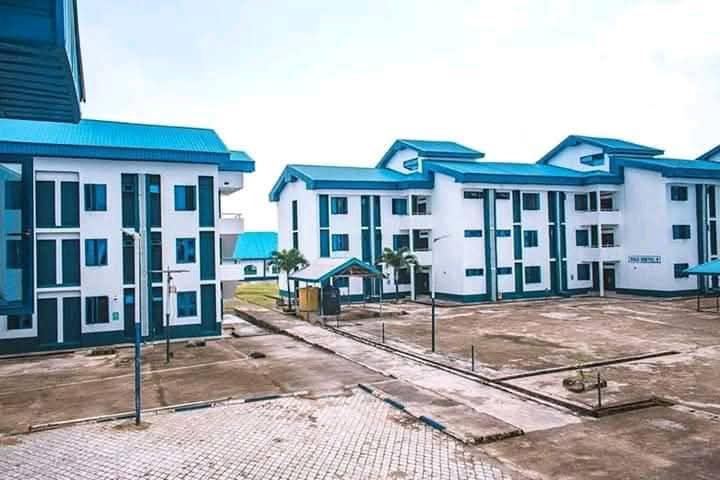
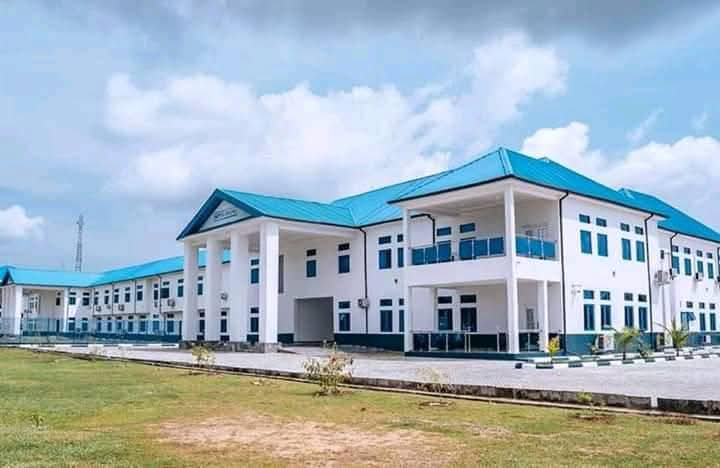
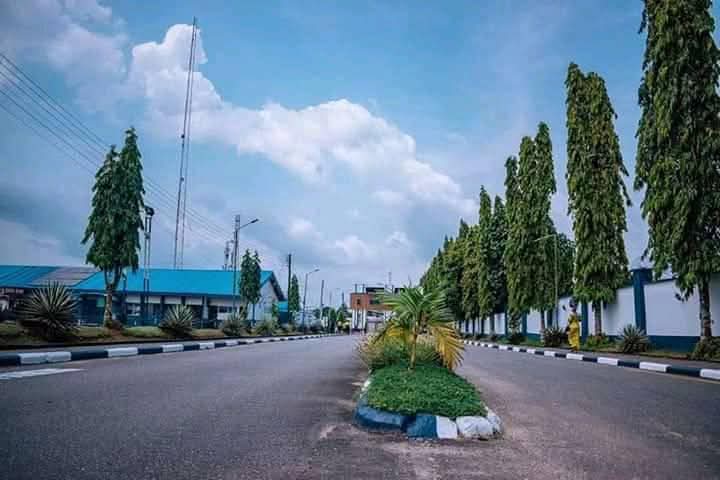
The University of Maritime Studies, Oron (UMSO) has a well-established physical and institutional foundation for the development of a standard university. The institution occupies a landmass of approximately 100 hectares, which meets the prescribed National Universities Commission (NUC) minimum benchmark for the establishment of a university.

This provides sufficient space for the present academic activities and future expansion of infrastructure and facilities. The complete fencing of the institution is also a significant advantage, as it enhances security, protects the institution’s property and helps prevent land encroachment and related disputes.
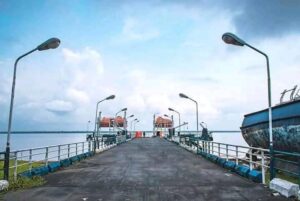
The academic facilities currently available at UMSO are considered adequate to support the immediate transition and commencement of university operations. The teaching and learning facilities provide a reasonable foundation for academic programmes, while other physical and municipal facilities are also sufficiently available. Nevertheless, these facilities will require continuous upgrading and expansion to meet the changing needs of a growing university.
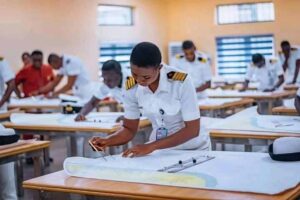
The institution also demonstrates positive conditions in terms of technological infrastructure, security and general facility management. Internet connectivity within the premises is above average, thereby supporting teaching, learning, research and administrative activities.
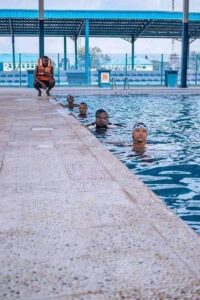
In addition, the Academy has a commendable maintenance culture, which contributes to the preservation and functionality of its facilities. Record keeping is also highly commendable, with information and communication technology (ICT) resources fully deployed to support effective documentation, administration and institutional management.
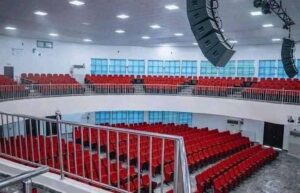
Overall, the current status of UMSO’s facilities indicates that the institution possesses a strong foundation for university operations, with the major requirement being the systematic upgrading, expansion and regular maintenance of existing facilities to support sustainable growth and meet university standards.
Budgetary provisions since passage of UMSO Bill
Passed by the Senate on 7 July, 2022 and the House of Representatives on 8 December, 2022, the University of Maritime Studies (Establishment) Act, 2022, later signed into law by President Muhammadu Buhari on 16 February, 2023, has suffered multiples of budgetary denials. The Maritime Academy of Nigeria, Oron, having not transited, has continued to enjoy budgetary provisions. For four straight years (2023-2026) the institution has enjoyed budgetary allocation from the federal government of Nigeria to the tune of Nine Billion and Nineteen Million Five Hundred and Twenty-Seven Thousand Five Hundred and Fifty Naira (N9,019,527,550).
WatchmanPost visited the official website of the Budget Office of the Federation, drawing figures of the budgetary provisions from 2023 to 2026. The documents revealed, as expected, that the Maritime Academy of Nigeria, Oron received budgetary allocation from the Federal Ministry of Transport in the 2023 Appropriate Bill, while those of 2024, 2025 and 2026 were drawn from the Federal Ministry of Marine and Blue Economy. Recall that prior to the administration of President Bola Ahmed Tinubu, who created the Federal Ministry of Marine and Blue Economy as an independent ministry, it was the Transport Ministry that supervised the Maritime Academy of Nigeria, Oron.
Accordingly, the 2023 allocation to MAN Oron was One Billion Five Hundred and Fifty Million Nine Hundred and Ninety-Five Thousand One Hundred and Eighty-Eight Naira (N1,550,995,188). In 2024, the allocation became a little higher, being One Billion Six Hundred and Twenty-Six Million Nine Hundred and Forty-Eight Thousand Five Hundred and Sixty-Four Naira (N1,626,948,564). In 2025, the allocation became almost double that of the two previous years. It was Three Billion One Hundred and Fourteen Million Eight Hundred and Seventy Thousand One Hundred and Twenty Three Naira (N3,114,870,123) only. Then in the 2026 Appropriation Act, the federal allocation to MAN Oron became Two Billion Seven Hundred and Twenty-Six Million Seven Hundred and Thirteen Thousand Seven Hundred and Seventy-Five Naira (N2,726,713,775) only.
Beyond the federal allocation however, the Academy still received the statutory Five per cent (5%) from the Nigerian Maritime Administration and Safety Agency (NIMASA) and other relevant agencies of the federal government. Analysts have however described these provisions as “illegal.”
UMSO and the resort to litigations
One last option that stakeholders from the host community is exploring is litigation. Frustrated that what should have been a collective aspiration of the entire Akwa Ibom People have been left for the Oron People, the “patriots” resorted to ventilating their struggles through the courtroom.
The Oro Youth Movement (OYOM), for instance, took a step in this direction. The group secured a significant legal development in its pursuit of the full implementation of the University of Maritime Studies, Oron (UMSO). In a suit against the Honourable Attorney General of the Federation, OYOM filed an Ex Parte Motion on 20 May, 2026 before the Federal High Court, Uyo Judicial Division, seeking leave to commence judicial review proceedings to compel implementation of the law establishing UMSO. On 4 June 2026, after hearing OYOM’s counsel and considering the processes filed, the Court granted leave for the substantive action to proceed.
The leave covers applications for an Order of Mandamus compelling the Federal Government and relevant agencies to appoint UMSO’s Principal Officers and Governing Council, disburse funds to UMSO rather than the repealed Maritime Academy of Nigeria, Oron, and formally effect the change of name; an Order of Prohibition restraining further disbursements from the Federation Account, NIMASA and/or the Federal Ministry of Marine and Blue Economy to the repealed Maritime Academy; and an Order of Injunction restraining Dr. Kelvin Okon Okonna from parading himself as Acting Rector of the Maritime Academy of Nigeria, Oron, an office OYOM says had long ceased to exist, following the repeal of the Academy’s Act and establishment of UMSO in 2022.
A statement signed by Comrade Edet Iyahakwa, National Secretary, on 18 June 2026, revealed that the substantive matter was adjourned to 16 July, 2026 for hearing.
WatchmanPost however understands that the matter was further adjourned to 6 October, 2026, after representatives of the federal government were absent in court.
Again, the Incorporated Trustees of Oron Union has equally notified relevant government agencies and individuals of its intentions to sue them. The premises of their intentions border on the illegality of the current status of MAN Oron. Having the President of the Federal Republic of Nigeria, the Attorney General of the Federation, the Senate of the Federal Republic of Nigeria, the Federal House of Representatives, the Maritime Academy of Nigeria, Oron, and Dr Kelvin Okonna as 1st to 6th Defendants, Oron Union intends to seek several reliefs from the court, including the fact that the Maritime Academy of Nigeria (MAN) Oron can no longer operate under the old law, after the UMSO Act came into effect.
Just last week Thursday, 17 September, 2026, the Chairman of the Oro Stakeholders’ Forum for the Actualisation of UMSO, Sir Asuquo Inuikim, joined the live broadcast of the Brekete Family TV/Radio in Abuja, using the platform to further enlighten the Nigerian citizens and equally petitioning the Ordinary President, himself, Dr. Ahmed Isah. After Dr Inuikim narrated the unfortunate story of UMSO, the Ordinary President set up a committee mandated to meet with the Minister of Education on Monday, 21 September 2026 for intervention.
Reactions from government officials
The first person to be contacted for this response was Senator Wasu Eshilokun Sanni. The Lagos State Senator who is the Chairman, Senate Committee on Marine Transport was responsible for the initiation of a Bill to repeal the UMSO Act. As captured in the second part of this report, Senator Sanni succeeded in moving the Bill past the First Reading. He nearly succeeded having the Second Reading before the presence of some stakeholders in the Senate environment turned things around.
WatchmanPost wanted to know exactly why the Senator moved to repeal the UMSO Act when the institution did not even kick off. But multiples of calls and messages sent to his verified phone line were not replied to. One of the texts, also sent to him on WhatsApp on Sunday, 6 September, 2026, reads, “Hello good evening and Happy Sunday Distinguished. Please, I am Joseph Atainyang, a journalist calling from Akwa Ibom State. Sorry, I wish to know the progress of your piece of legislation regarding the abrogation of UMSO Act to bring back Maritime Academy of Nigeria, Oron. Your prompt response will be highly appreciated. Thank you.” Like the rest, this message received no response.
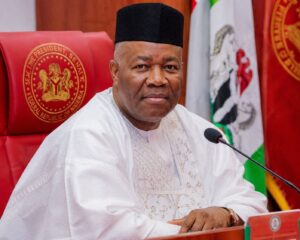
On the promises made by Senate President Godswill Obot Akpabio during meetings with Akwa Ibom stakeholders in his office in Abuja, the official spokesperson to the Senate President, Hon. Eseme Eyiboh, noted that “The Senate President is very active about all what he said in those meetings.” He did not, however, disclose when the public should expect to see the results of the actions.
On the part of Gov Umo Eno, WatchmanPost reached out to both the Commissioner for Information, Hon Aniekan Umanah and the Chief Press Secretary to the Governor, Mr Ekerete Udoh, but received no positive response. It could be recalled that after a meeting of Akwa Ibom stakeholders attended by Ambassador Assam Assam, Prof Akpan Morgan Ekpo, among many others, a communique dated 15 July 2025 had been issued with a call on the governor to intervene.
The communique had called on Governor Umo Eno to use his fatherly disposition and meet both Senate President Godswill Akpabio and President Bola Ahmed Tinubu to see how the matter could be resolved. As at the time of filing this report, messages sent to both Hon Aniekan Umanah and Mr Ekerete Udoh had been left unreplied for over five weeks.
Multiple calls sent to Mr Umanah were neither received nor returned. But when Mr Ekerete Udoh answered a call on 8 September, he asked our reporter whether he was working at maritime. When WatchmanPost answered in the negative, Mr Udoh said he could not answer a question about the institution since he wasn’t working there.
Similarly, private messages sent to the deputy governor, Senator Akon Eyakenyi, between 24 August and 7 September, 2026, were not responded to. Our reporter contacted the Press Secretary to the deputy governor, Omen Bassey Esq, seeking reactions on the matter. Mr Bassey, however, said Mrs Eyakenyi was indisposed and that he had no information on what the state government had done on the matter.
For the Ag Rector of Maritime Academy of Nigeria Oron, Dr Kelvin Okonna, calls and messages sent to his phone were ignored. WatchmanPost tried but could not secure an appointment with the rector. Compelling issues made Mr Okonna’s response necessary. For instance, when the Senate Committee on Legislative Compliance wrote to the Ministry of Marine and Blue Economy, seeking answers on why it was delaying the take-off of UMSO, the ministry denied any hand in it. It said it has asked the management to transit seamlessly into a university.
Also, when the assessment team from the Ministry of Education and the Ministry of Marine and Blue Economy, together with the National Universities Commission (NUC) visited the institution in May 2024, it clearly stated in its report that two years of grace was given so the institution could graduate its ND and HND students. But surprisingly, the academy has advertised and admitted students for three consecutive sessions since then. It did so in 2024, 2025 and 2026.
WatchmanPost was therefore interested in finding out from the rector where he got the powers to keep admitting students every year. The last message sent to Mr Okonna reads, “Hello Dr, I’ve been trying to call. I am Joseph Atainyang, a journalist from Akwa Ibom State. Please kindly grant me an audience for an inquiry about the state of affairs at UMSO. I am trying to conclude a report about the upgrade of MAN Oron to UMSO. I will appreciate your prompt response, Sir.” This message received no response for about three weeks before this publication.
An alternative call put across to the Head, Public Relations, Comrade Domo Umoekpe, yielded no results. She told our reporter that she had no authority to speak on the matter.
In his reaction, the chairman of Oron Local Government Area, Chief Asukwo Enweme expressed hope that the institution would certainly commence university education. Enweme who spoke with WatchmanPost in his office on Thursday, 10 September, 2026, said stakeholders within the immediate host community were in full support of the university transition.
Recalling when he was President of Akpakip Eyo-Abasi Youth Association, Ulap Enweme said he was around when former Governor Godswill Akpabio acquired additional 31 hectares of land and paid full compensation to the host communities in order to facilitate the upgrade of the institution to a university.
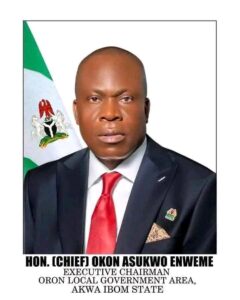
His words, “We must not protest about everything. This is a federal government institution. It was the federal government that brought the Academy to us. It was the federal government that brought the idea of upgrading it to a university. The NUC that came to assess it is an agency of the federal government. All that has been done so far has been done by the federal government. So if they have not yet commenced the university, it is not our place to fight. Let us exercise patience. We all know that the place is already a university.”
Reacting to the development, the Founder and President of Open Forum, a human rights and civil society group, Citizen Matthew Kofi Okono, condemned what he described as brazen impunity. He said, “The sustained, brazen, unconstitutional operation and funding of the defunct Maritime Academy of Nigeria, Oron after the 2022 enactment of the University of Maritime Studies, Oron Law points to the fact that the institution can safely be classified amongst the FAKE AGENCIES currently in operation in Nigeria. The earlier authorities end this organised illegality and impunity, the better.”