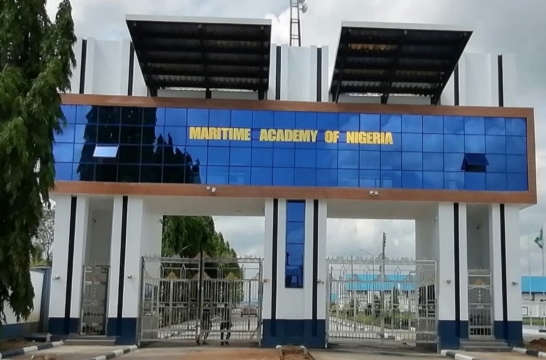
How does a university established by an Act of the National Assembly, assented to by the president, enrolled, gazetted, transmitted to the relevant ministries, subjected to NUC takeoff processes and eventually recognised for admission processing by the Joint Admission and Matriculation Board (JAMB), remain without full institutional operationalisation years after its legal creation? JOSEPH ATAINYANG uses this investigative report to beam a torchlight on the timeline that answers the quesion.
The University of Maritime Studies Oron (UMSO) was duly established by an Act of the parliament. It followed a presidential assent and was enrolled as law and subsequently published in the Federal Government Gazette. Government ministries were formally notified. The National Universities Commission (NUC) became involved in the process of assessing the institution for takeoff. The Joint Admissions and Matriculation Board (JAMB) later invited the University of Maritime Studies, Oron (UMSO) to participate in admission processing alongside newly approved and upgraded universities. Yet, almost four years after the law came into force, the university remains caught in a troubling gap between what the law created and what the government has actually delivered. Somewhere between legislation, bureaucracy, regulation, institutional interests and political intervention, the promise of UMSO becomes trapped in the web.
The deeper mystery is not simply why UMSO has struggled to take off. It is who or what has kept it from taking off. A well assembled documentary trail points to a far more complicated story than a simple failure of government. This investigation follows the paper trail from the birth of the UMSO idea to its present state, asking the question that those documents demand: how did a university created by law become a university still waiting for the full force of that law to be realised, and who bears responsibility for the delay?
Historical background: The genesis of UMSO
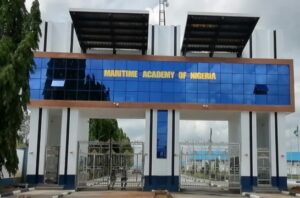
Just like pregnancy leads to birth, bringing life into existence, UMSO did not appear out of the blues. The University could best be described as a stillborn that glided to its incubation womb for over two decades. As early as the year 2001, the Nigerian government, through the then Chairman of the Governing Board of the Maritime Academy of Nigeria (MAN) Oron, AVM Umaru Abbas, as cited on page 15 of The New Transportant Vol 6. No.26, expressed the determination of the Board to improve upon the fortunes of the institution and improve its facilities and structures to equip it for the challenges ahead. He listed some approvals given to the Academy by the federal government to include “improving its facilities and adequately funding the Academy for an eventual upgrade to a status of maritime university.”
At the same graduation ceremony of the 2001 marine cadets, the Minister of Transportation, Chief Ojo Maduekwe, declared intention to make the institution a maritime university. The Late Maduekwe who lived between 1945 and 2016, and would later become minister of Foreign Affairs, reiterated this call during the 2003 Passing-out-Parade (POP) of the Academy, saying the transformation of MAN Oron into a university was critical to the nations maritime development.
According to Transport Digest Magazine Vol 1. No.1, dated October 2005, the Minister of Transport, Dr Abiye S.P. Sekibo, who was a guest of honour at that year’s graduation ceremony, further confirmed the government’s resolve to transform the Academy into a maritime university. He observed such an upgrade, “would accelerate the growth and development of Nigeria’s maritime and allied industries.”
Meanwhile, the Report of the Technical Committee on the Niger Delta (2008; p.88), cites a Special Reproduction by the Movement for the Survival of the Ogoni People (MOSOP), under health and education demands. The 44-member committee had Mr Ledum Mitee as chairman and Mrs Nkoyo Toyo as secretary. Mrs Nkoyo Esu Toyo would later be appointed Nigeria’s Ambassador to Ethiopia and Djibouti and serve as House of Representatives Member between 2011 and 2015.
The report called for the “upgrade of the Maritime Academy of Nigeria, Oron to a maritime university to develop the human capital required for diversified economic and maritime activities in the region.”
Similarly, April 2008 witnessed a delegation from the Norwegian Ship Owners’ Association who visited the academy and discussed a collaborative training programme with it. Later in October the same year, the Minister of State for Transport, Prince John Okechukwu Emeka, said the academy would soon be upgraded to become a degree-awarding institution. He also called for increased funding from the Federal government.
Again, the Nigerian Universities Commission (NUC) visited the Academy in 2010 to assess its suitability for an upgrade to a university status. Although the Commission’s requirements included adequate land space, infrastructure, facilities and equipment, curriculum and personnel, NUC noted that the outstanding thing that hindered the university status of the Academy was land space, because it was sited in a 69-hectare land, instead of a minimum of 100 hectares. The commission said an acquisition of an additional 31 hectares would seamlessly afford the institution the required standard for the transition into a university. Between 2010 and 2011, the additional 31 hectares of land was acquired and the Akwa Ibom State Government under the leadership of Chief Godswill Obot Akpabio paid a compensation of Three Hundred and Thirty Million Naira (N330,000,000.00) only to land owners.
Interestingly, on 21 February, 2011, an Internal and External Advertisement for Appointment of Rector by the Maritime Academy of Nigeria (MAN), Oron published on page 59 of ThisDay Newspaper, stated that a qualified candidate when appointed as rector, should aside from undertaking required daily administrative duties, work hard towards the upgrade of the institution to a maritime university.
The text of the advert reads thus in part, “The candidate, if employed, should be able to work hard in upgrading the institution from its present polytechnic status to a university, aside from being responsible for the general administration and academic affairs of the Academy, in accordance with the provisions of the Law establishing the institution….”
Records reveal that in 2012, when the then Minister of Transport, Senator Idris Umar, visited the Academy as guest of honour at the P-O-P/graduation ceremony, and also paid a courtesy call to the Ahta Oro in Council, Ahta Etim Atti Okpo, in his palace at Edikor, Udung Uko local government area of Akwa Ibom State, the Minister stated at both occasions that the Academy would soon be upgraded to a maritime university and that a committee would soon be set up to come up with an action plan to that effect.
In 2013, the then Rector of MAN Oron, Late Mr Joshua Okpo, briefed the Senate Committee on Maritime Transport on steps being undertaken by his management team to prepare the institution for the envisaged upgrade. The Committee led by its chairman, Senator Zainab Kure, was at the Academy as part of its oversight functions. Other members of the committee who made it to the meeting were: Senator Pius Ehwerido, Co-chairman; Sen George Akume (currently the Secretary to the Government of the Federation); Sen Abubakar Yar’Adua, Sen Saidu Alkali, Sen Gilbert Nnaji, Sen Danladi Sarkara and Sen Joshua Dariye. Okpo informed the Committee that measures, including the constitution of a 17-man committee were in place for the upgrade of the institution to a maritime university.
The SEA Trainers Magazine, Vol 1.No.1 (2014; p.5-6), captures the moment succinctly, thus: “Mr Okpo enumerated the remarkable achievements and giant strides recorded by the Academy in his less than one year stay in office. Among his achievements were the renovation of dilapidated buildings and structures; development of a masterplan for the additionally acquired portion of land in fulfilment of the requirement by the National Universities Commission (NUC) for the upgrade of the Academy to a maritime university.
“Okpo used the occasion to plead with the Senate Committee to play a cardinal role when the Federal Ministry of Transport’s 17-man committee on the university status forwarded its report to the distinguished senators for the upgrade of the Academy to a maritime university.”
The same year 2013, Mr Joshua Okpo embarked on aggressive collaboration with relevant global and regional agencies to ensure the institution stood solid and firm for the envisaged upgrade. Joshua Okpo signed a Memorandum of Understanding (MOU) with the Piri Pies University in Istanbul, Turkey, for the Global Onboard Training Centre (GOBTC) to provide quality Standard Training Certification and Watch-keeping (STCW), and the required Sea-Time Training onboard foreign going ships for 250 cadets of the Academy for five years.
The Okpo-led Management also secured agreements with the Cape Peninsula University of Technology and the Marine Crew Services Limited, Cape Town, South Africa, to solve the Sea-Time Training difficulties of MAN, Oron cadets.
In his Evidence Beyond Doubts (2015; p.36), the then Deputy Director and HOD, PR, Mr Siddi Mkpandiok, “optimistically” observed that “these efforts would result in the final upgrade of the Academy to a maritime university.”
He added, “This will be in tandem with the urgings of the first President of the World Maritime University (WMU) to visit Nigeria and the Academy, Prof Bjorn Kjerfve in 2013, and of the representative of the International Maritime Organisation (IMO), Mr Ashok Mahapatra, who also visited the Academy in 2014 and supported the upgrade.
Towards the twilight of the Goodluck Jonathan era, the then governor of Akwa Ibom State, Chief Godswill Akpabio, now President of the Senate, wrote to the President, seeking the upgrade of MAN, Oron to a maritime university. The five-page letter dated 11 May, 2015, intimated the President on the process of land acquisition as directed by the NUC, compensation payment by the state government and concluded with prayers for the upgrade of the institution.
“Mr President Sir, flowing from the foregoing, the overall benefit and development of the maritime industry in Nigeria, I, on behalf of the good People of Akwa Ibom State humbly plead that you consider and: (1) approve and announce the upgrading of the Maritime Academy of Nigeria, Oron, to a maritime university; (2) appoint and announce a transition administrative structure for the new maritime university.”
Consequently, President Goodluck Jonathan announced the upgrade of MAN Oron to a Maritime University. A letter addressed to both the Minister of Transport and the Minister of Education, dated 18 May, 2015, and endorsed by the Senior Special Assistant to the President (Administration), Matt Aikhionbare, stated that the President had approved the upgrade of the institution.
This approval letter was appropriately copied the relevant government authorities including the Chief of Staff to the President; the Permanent Secretary, State House; the Permanent Secretary, Office of the President; and the Secretary to the Government of the Federation.
As a result, the then Minister of Education, Malam Ibrahim Shekarau, wrote to the Executive Secretary, National Universities Commission (NUC). The letter dated 22 May, 2015, and copied the then Minister of Lands, Housing and Urban Renewal, Dr Akon Eyakenyi, conveyed the President’s approval and directed its immediate implementation.
Unfortunately, the early years of the Muhammadu Buhari era seem to have brought bad omen to the realisation of the university. The approval by President Jonathan remained a mere pronouncement, without any commensurate effort to compel action.
Worried by the non-compliance with the upgrade approval, Oro leaders, in November 2015, had an audience with the then Minister of Transport, Hon. Chibuike Rotimi Amaechi. It was at this point that it became apparent that the then Minister of State for Petroleum Resources, Dr Ibe Kachukwu, had interest in the establishment of Maritime University in his home Delta State. That apparent conflict of interest tentatively truncated progress on the University of Maritime Studies, Oron, personally pronounced by former President Goodluck Ebele Jonathan.
In January 2017, a seven-man Ministerial Committee, initially chaired by High Chief Adebayo Sarumi, was constituted to assess the Academy and recommend its comprehensive repositioning. The committee comprised Captain Adamu Biu, Engr. Olu Akinsoji, Engr. Greg Ogbeifun, Mr. D.M. Dauda, Dr. Kevin Okonna and Mr. Sani Umar, with Arc. OtuIta Toyo later added following protests by the Oro people over representation.
The recommendations of the ministerial committee led to the establishment of the Interim Management Committee (IMC), which commenced far-reaching reforms in curriculum, staffing, administration, training and infrastructure. The IMC, followed by the Commodore Duja Emmanuel Effedua-led administration, delivered massive infrastructural development, including upgraded classrooms, hostels, library and ICT facilities, laboratories, simulators, workshops and other modern training facilities.
Thus, notwithstanding the controversies, protests and institutional challenges that characterised the period, 2015–2021 could best be described as the Academy’s “Dark Age,” if not for the massive infrastructure development undertaken by both the IMC and the Emmanuel Effedua-led administration, which eventually laid the foundation for its subsequent transformation. Whatever level of development happening at the time was insulated from public knowledge. A staff of the Academy told WatchmanPost that Effedua’s tenure as rector reduced the institution to a no-man’s-land, as the location (Oron) was removed from all the insignia of the Academy, including signpost, buses, headed paper, among others.
From this historical trajectory, it is clear that the struggle for the establishment of the University of Maritime Studies, Oron, was never an Akwa Ibom project in the narrow political sense, nor was it originally conceived as a sectional demand. It was, from inception, a national development imperative, repeatedly acknowledged by successive federal administrations, ministers, the National Universities Commission, maritime experts and the leadership of the Maritime Academy of Nigeria itself.
The persistent calls for the upgrade, the acquisition of additional land to meet NUC requirements, the presidential approval in 2015 and the various institutional preparations all demonstrate that the university was conceived as a solution to Nigeria’s maritime human-capacity deficit.
The people of the host communities are therefore not the authors of an artificial struggle; they instead naturally embraced and defended an initiative that promised education, employment, human-capital development and economic transformation in their immediate environment.
Their interest consequently becomes understood not as an attempt to appropriate a federal project, but as the legitimate response of people who recognise the developmental value of an institution located in their midst. In that sense, the UMSO question transcends Akwa Ibom politics: it is fundamentally about whether Nigeria will fulfil a longstanding national commitment to developing the manpower needed to drive its maritime future.
UMSO: A decade of legislative battle
The legislation that gave birth to the University of Maritime Studies, Oron (UMSO) has lasted for a decade. Spanning from 2013, with the first step made by the then House of Representatives Member for Oron Federal Constituency, Hon. Robinson Uwak, the long years of legislation ended with the presidential assent on 16 February, 2023.
Uwak did not only move a motion regarding the establishment of the Maritime University in Oron. He sponsored a bill to that effect. During the second reading of his Bill for an Act to Establish the Maritime University of Nigeria, Oron, Hon. Robinson Uwak, on 16 July, 2014, argued that Nigeria’s vast maritime potential could not be fully harnessed without developing the human capacity to drive the industry. Uwak highlighted Nigeria’s extensive coastline and inland waterways and stressed the strategic importance of shipping to the national economy, particularly to the oil and gas industry.
“The shipping industry is vital to any nation, including the Nigerian nation. It is the bedrock for our oil and gas industry, particularly offshore. It is the vehicle of our petro-based exports and also the importation of raw materials and finished goods”, he said.
He noted that although the Maritime Academy of Nigeria had been established decades earlier with a mandate to train technical manpower for the maritime industry, the country was still struggling with a shortage of indigenous seafarers. “35 years later, this objective has not been achieved”, he said.
According to Uwak, the problem had persisted despite the enactment of the Cabotage Act, which was intended to promote Nigerian participation in coastal shipping. He argued that foreigners continued to dominate manpower requirements in Nigeria’s domestic and coastal waters, creating both economic and security concerns.
The lawmaker identified local training and internationally recognised certification as the most practical solution to the problem. In his words: “Local training and certification of seafarers remains that smartest, fastest, efficient and most economical avenue of training the various levels of personnel required for the running and operation of the nation’s maritime industry.”
Uwak therefore presented the proposed university as a means of strengthening the existing institution at Oron and addressing its accreditation and certification limitations. He also drew attention to the thousands of Nigerian cadets who had passed through the Academy but were unable to fully participate in the maritime industry.
“Over 10,000 Nigerian cadets who have graduated from MAN Oron still cannot support the Nigerian Maritime Industry as IMO standards render them unemployable.…”
For Uwak, transforming the Academy into a university was ultimately about developing Nigerian manpower, reducing dependence on foreign personnel and positioning the country to take greater ownership of its maritime economy. He summed up the purpose of the proposed legislation as an effort to address: “a human capacity deficit in Nigeria’s maritime industry that has resulted in a situation where foreigners dominate shipping operations.”
Although this legislation did not see the light of the day, as Hon Uwak did not return to the green chambers to pursue its passage in the green chambers and subsequent concurrence at the Senate, his constituents continue to describe him as one whom history has “sealed in green”, because of his sacrifice for the welfare and development of his people.
Then came Senator Nelson Effiong of Akwa Ibom South Senatorial District. Voted into office in 2015, Senator Nelson played a central role in the legislative push to upgrade the Maritime Academy of Nigeria, Oron to a maritime university. He sponsored the Bill for the establishment of the Federal University of Maritime Studies, Oron, FUMSO.
In defending the upgrade, Senator Effiong reminded the Senate that the Maritime Academy at Oron in his Senatorial District, has trained seafarers for nearly 40 years and had already been approved by former President Goodluck Jonathan and was with the National Universities Commission.
He argued that government should work on that existing approval and upgrade the institution rather than start a fresh one for economic reasons, even amidst concerns raised by the Minister of Transport about funding and priority.
The Bill recorded significant progress when the Senate read it for the second on 16 November, 2016, leading to the public hearing held in February, 2017. The FUMSO Bill was later read for the third time and passed on 6 July, 2017.
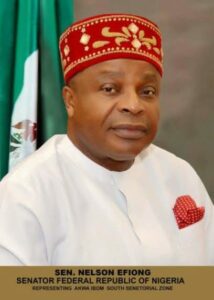
Unfortunately, Senator Effiong could not be named a champion as there was no concurrence of the bill at the House of Representatives.
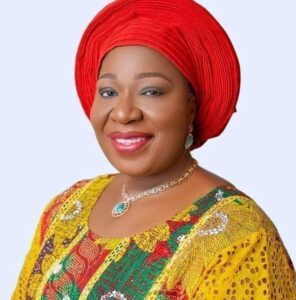
On her part, Dr Akon Eyakenyi was elected into the Senate in 2019. Consulting with constituents, Senator Eyakenyi sponsored the maritime university bill pushing to transform the Maritime Academy of Nigeria, Oron, into a full-fledged university.
The bill sought to institutionalise an upgrade that had been contemplated by successive administrations for years, with the broader objective of strengthening Nigeria’s maritime human capacity development. Its passage by the Senate in 2022 underscored the recognition that the country’s maritime sector required specialised university-level training to produce the professionals needed to manage shipping, ports, waterways, offshore activities and related industries.
The Senate’s consideration also reflected the national economic importance of developing indigenous maritime manpower. During the debate, it was noted that Nigeria continued to suffer losses in the maritime sector because of deficits in trained personnel and seafarers, while significant resources were being spent to obtain maritime expertise and qualifications from outside the country.
The proposed university was therefore envisaged not merely as an institution for Oron or Akwa Ibom, but as a national centre for specialised maritime education and research. Its passage in 2021 was another important milestone in the long-running effort to convert the Maritime Academy into a university capable of meeting Nigeria’s maritime needs and contributing to the development of the South-South region and the country as a whole.
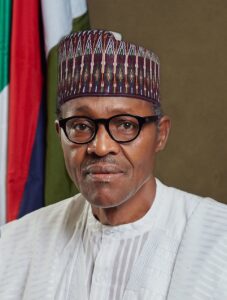
Fortunately, this final lap paid off as the House of Representatives also concurred and passed the bill on December 8, 2021. The bill was then forwarded to the Senate for harmonisation and then for presidential assent. To seal the deal, President Muhammadu Buhari, on 16 February, 2023, endorsed his signature, giving a final assent for the full operationalisation of the University of Maritime Studies Oron (UMSO).